
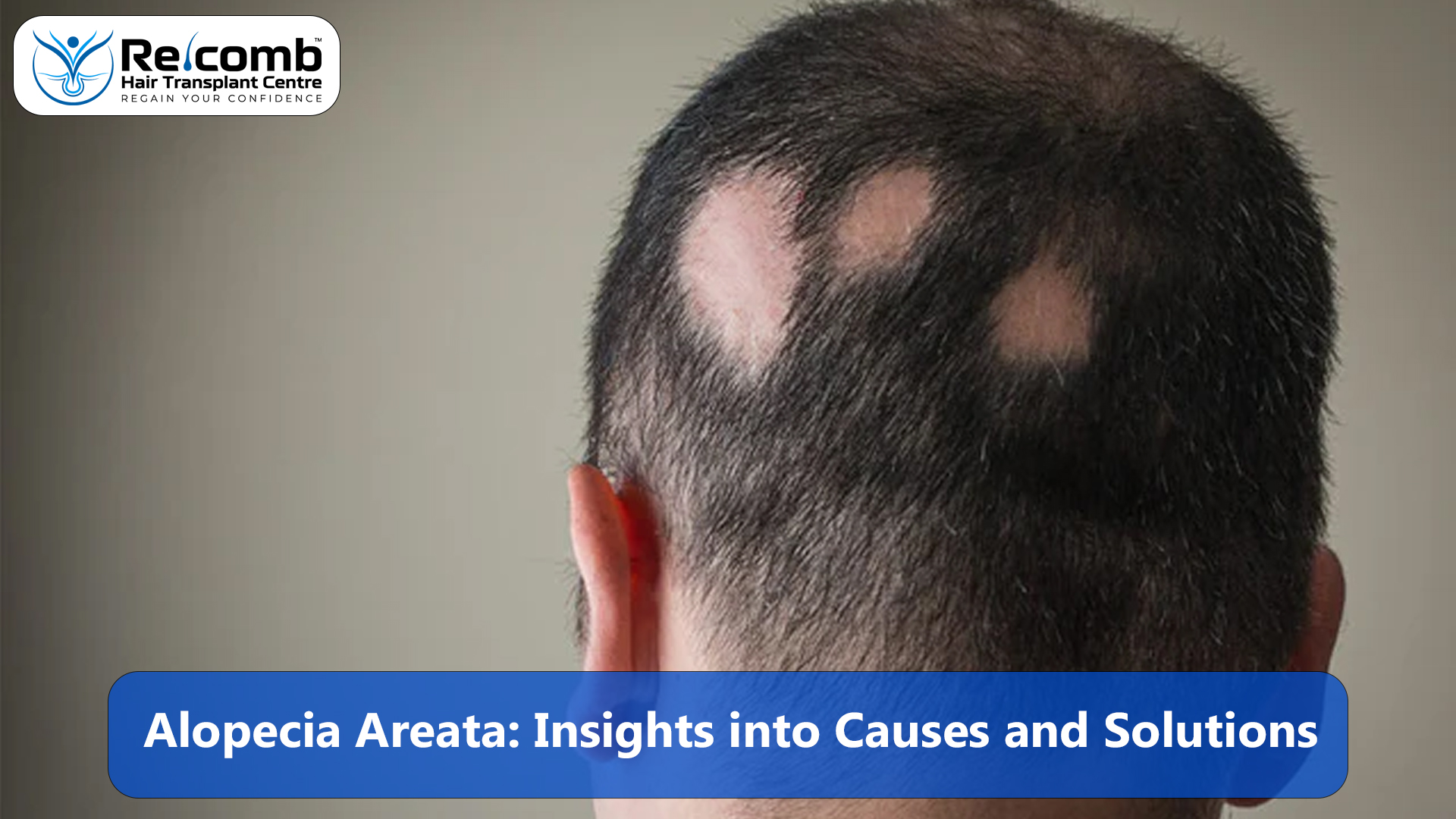
Alopecia areata is one of the most misunderstood hair loss conditions. Patients often panic when they notice sudden round or oval bald patches, fearing permanent baldness. The reality is very different.
Alopecia areata is an autoimmune condition, not genetic baldness and not a cosmetic issue. With early diagnosis and correct treatment, hair regrowth is possible in many cases.
At RECOMB Hair Transplant Centre, Surat, alopecia areata is managed medically and ethically, never surgically unless clearly indicated.
What Is Alopecia Areata?
Alopecia areata occurs when the immune system mistakenly attacks hair follicles, pushing them into a resting phase.
Key characteristics:
-
Sudden patchy hair loss
-
Smooth, non-scarring bald patches
-
Hair follicles remain alive
-
Potential for spontaneous regrowth
Because follicles are not destroyed, alopecia areata is considered a reversible form of hair loss in many patients.
Types of Alopecia Areata
1. Patchy Alopecia Areata
-
Most common form
-
One or multiple bald patches
-
Good prognosis with treatment
2. Alopecia Totalis
-
Complete scalp hair loss
-
More resistant to treatment
3. Alopecia Universalis
-
Loss of all body hair
-
Rare and severe
4. Ophiasis Pattern
-
Hair loss along sides and back of scalp
-
Often chronic
Identifying the pattern helps determine prognosis and treatment intensity.
What Causes Alopecia Areata?
1. Autoimmune Dysfunction
The immune system targets hair follicles, mistaking them for foreign cells.
2. Genetic Predisposition
Family history of autoimmune diseases increases risk, though direct inheritance is uncommon.
3. Stress and Emotional Triggers
Severe emotional or physical stress can trigger or worsen episodes.
4. Associated Autoimmune Conditions
Common associations include:
-
Thyroid disorders
-
Vitiligo
-
Atopic dermatitis
-
Type 1 diabetes
Common Myths About Alopecia Areata
-
It is not contagious
-
It is not caused by poor diet alone
-
It is not permanent in most cases
-
Hair transplant is not first-line treatment
Understanding these facts prevents unnecessary fear and wrong treatment choices.
How Is Alopecia Areata Diagnosed?
Diagnosis is clinical and supported by:
-
Scalp examination
-
Trichoscopy (exclamation mark hairs)
-
Blood tests for autoimmune markers if needed
Early diagnosis improves treatment success.
Effective Treatment Options for Alopecia Areata
1. Intralesional Corticosteroid Injections
-
Gold standard for patchy alopecia areata
-
Reduces immune attack on follicles
-
Promotes regrowth within weeks
2. Topical Immunotherapy
Used in extensive or resistant cases under strict supervision.
3. Topical and Oral Medications
-
Corticosteroids
-
Immunomodulators
-
JAK inhibitors (selected cases, specialist use only)
4. PRP and GFC Therapy (Adjunctive Role)
These treatments:
-
Improve follicle environment
-
Support regrowth
-
Do not cure autoimmune activity
Used only as supportive therapy, not standalone treatment.
Why Hair Transplant Is Usually Not Recommended
Hair transplant is contraindicated in active alopecia areata because:
-
Immune attack continues
-
Transplanted hair may fall
-
Disease may spread unpredictably
Only rare, long-term inactive cases may be evaluated for surgery, with caution.
Prognosis: Will Hair Grow Back?
Prognosis depends on:
-
Age of onset
-
Extent of hair loss
-
Number of patches
-
Associated autoimmune disease
Many patients experience:
-
Partial or complete regrowth
-
Recurrent episodes
-
Long-term remission with treatment
Early medical care significantly improves outcomes.
RECOMB’s Medical Approach to Alopecia Areata
At RECOMB Hair Transplant Centre, alopecia areata management focuses on:
-
Correct diagnosis
-
Immune control
-
Conservative, evidence-based treatment
-
Avoiding unnecessary surgery
-
Psychological reassurance
Patient education is as important as medication.
Final Medical Perspective
Alopecia areata is treatable, manageable, and often reversible—but only when approached correctly.
-
It is an autoimmune disease, not cosmetic baldness
-
Early treatment improves regrowth
-
Hair transplant is rarely indicated
-
Medical supervision is essential
At RECOMB, we treat alopecia areata with science, patience, and honesty.
Contact RECOMB Hair Transplant Centre
Phone: +91 7624008000
Website: www.recombhair.com