
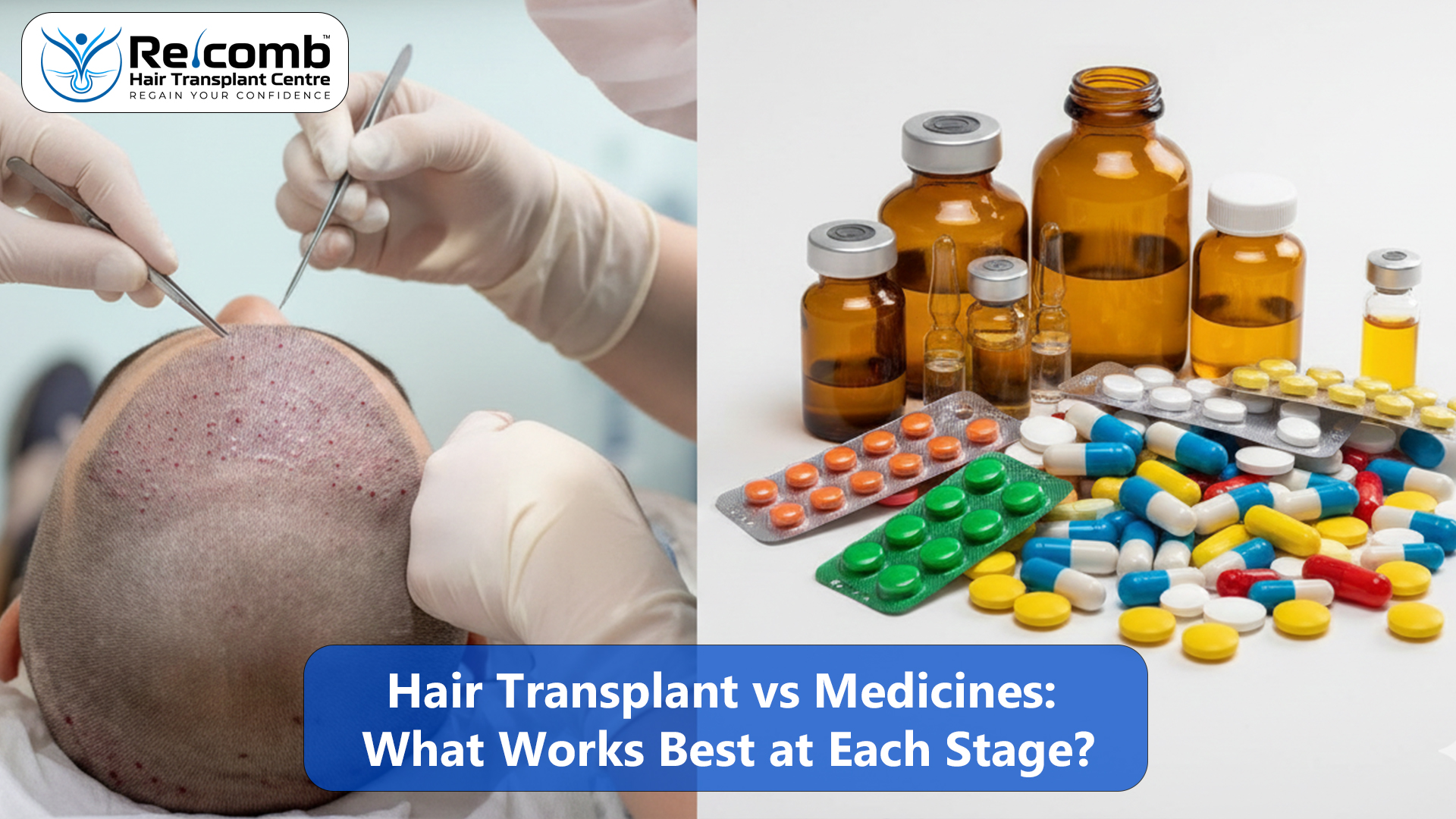
One of the most common questions patients ask is:
“When are medicines enough, and when do I need a hair transplant?”
Both treatments play important but different roles in managing hair loss. The effectiveness depends entirely on your baldness stage, scalp condition, and hair follicle health.
At Recomb Hair Transplant Centre, Surat, we use a stage-wise approach to determine whether medicines, therapies, or a transplant will give the best and most natural results.
Below is a complete roadmap based on the Norwood scale.
Stage 1: Minimal Hairline Thinning or Mild Shedding
Best Treatment: Medicines Only
A hair transplant is not required at this stage.
Recommended approach:
-
DHT blockers (as medically advised)
-
Topical growth stimulators
-
Supplementation to correct deficiencies
-
PRP / GFC if shedding is active
-
Stress management and scalp care
Goal: Stop hair loss early and thicken existing follicles.
Stage 2: Early Recession (“M-Shape”)
Best Treatment: Medicines + Growth Factor Therapies
At this stage, medicines can reverse miniaturization and stabilize the hairline.
Best options:
-
PRP or GFC therapy
-
Medical treatment for 6–12 months
-
Lifestyle correction
Transplant is not recommended yet, unless recession is clearly defined and stable.
Stage 3: Visible Hairline Loss or Deep Temples
Best Treatment: Medicines + Possible Transplant
At this stage, medicines can only preserve existing hair. They cannot bring back lost hairline areas because follicles are already gone.
The ideal plan:
-
Sapphire FUE hairline restoration
-
Medical therapy for maintenance
-
GFC/PRP to strengthen surrounding areas
Transplant becomes the best option for restoring the natural look.
Stage 4: Frontal + Mid-Scalp Thinning
Best Treatment: Combination of Transplant + Medicines
Lost areas require a hair transplant.
Existing areas require medical therapy.
Treatment plan:
-
Sapphire FUE (2500–3500 grafts)
-
Continuous maintenance therapy
Medicines alone cannot reverse this stage.
Stage 5–6: Extensive Baldness
Best Treatment: Transplant (Multiple Areas) + Maintenance Medicines
These stages involve significant hair loss where medicines cannot restore lost areas.
Recommended approach:
-
High-density Sapphire FUE
-
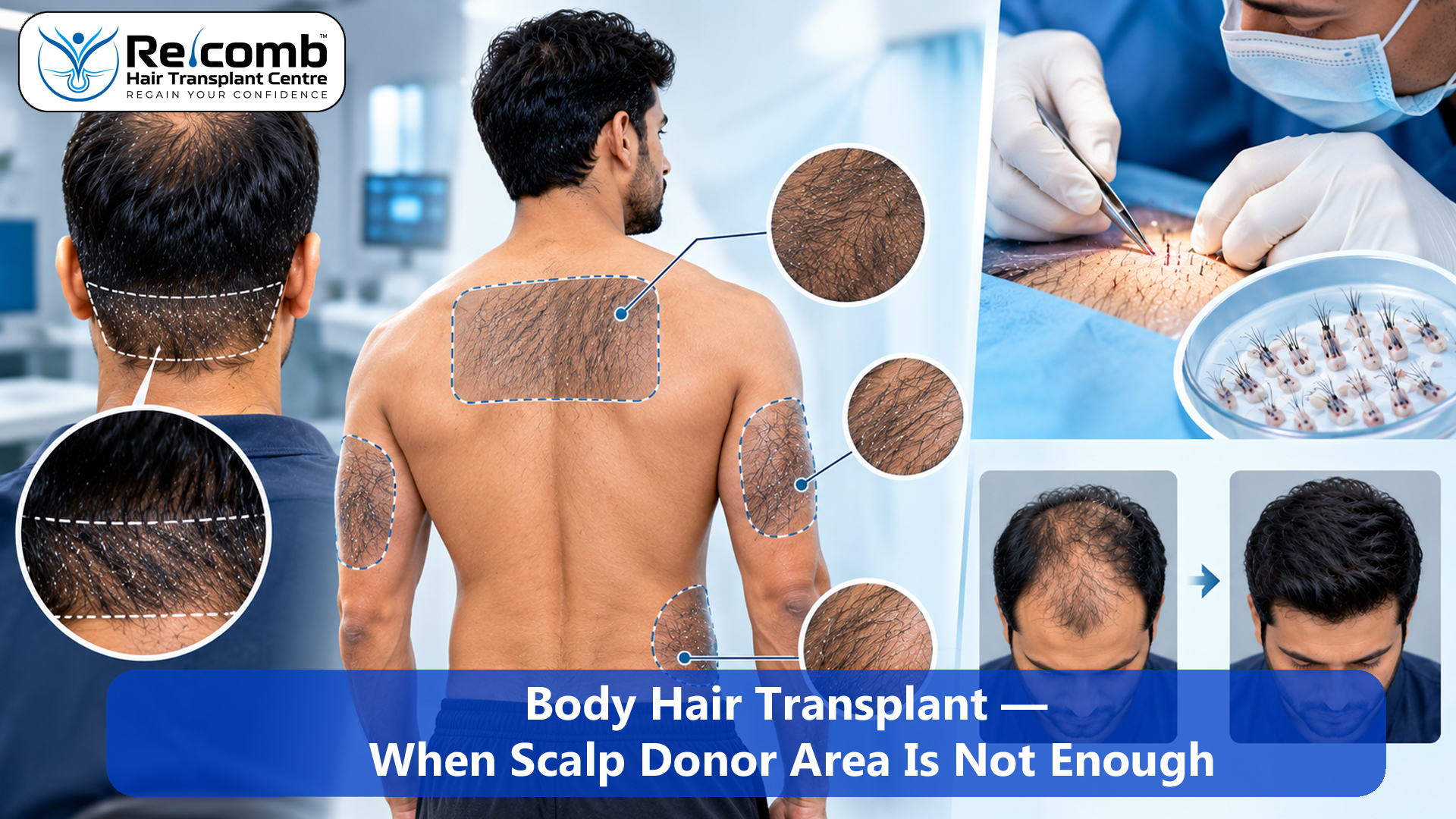
Beard grafts if donor scalp is limited
-
Medical therapy to preserve remaining native hair
Medicines help slow future loss but cannot replace transplantation.
Stage 7: Severe Baldness
Best Treatment: Transplant with Combined Donor Sources
At this stage, the scalp donor area is usually insufficient.
Plan includes:
-
Scalp + beard grafts
-
Conservative hairline
-
Long-term medical maintenance
Medicines alone have minimal benefit at this point.
Medicines vs Hair Transplant: Quick Comparison
| Factor | Medicines | Hair Transplant |
|---|---|---|
| Restores Lost Hair | No | Yes |
| Stops Future Hair Loss | Yes | Only medicines do this |
| Best For | Early thinning | Moderate to advanced baldness |
| Results Visible | 3–6 months | 6–12 months |
| Permanent Solution | No | Yes |
| Works on Miniaturized Hair | Yes | No |
| Works on Bald Areas | No | Yes |
What We Recommend at Recomb Hair Transplant Centre
Medicines are best for:
-
Early thinning
-
Stabilizing hair loss
-
Strengthening weak follicles
Transplant is best for:
-
Restoring areas where hair is permanently lost
-
Creating density and natural hairlines
-
Long-term aesthetic improvement
Both Together Give the Best Results
Most patients need a combination of medical treatment + transplant for long-term success.
Contact Recomb Hair Transplant Centre
Phone: +91 7624008000
Website: www.recombhair.com