
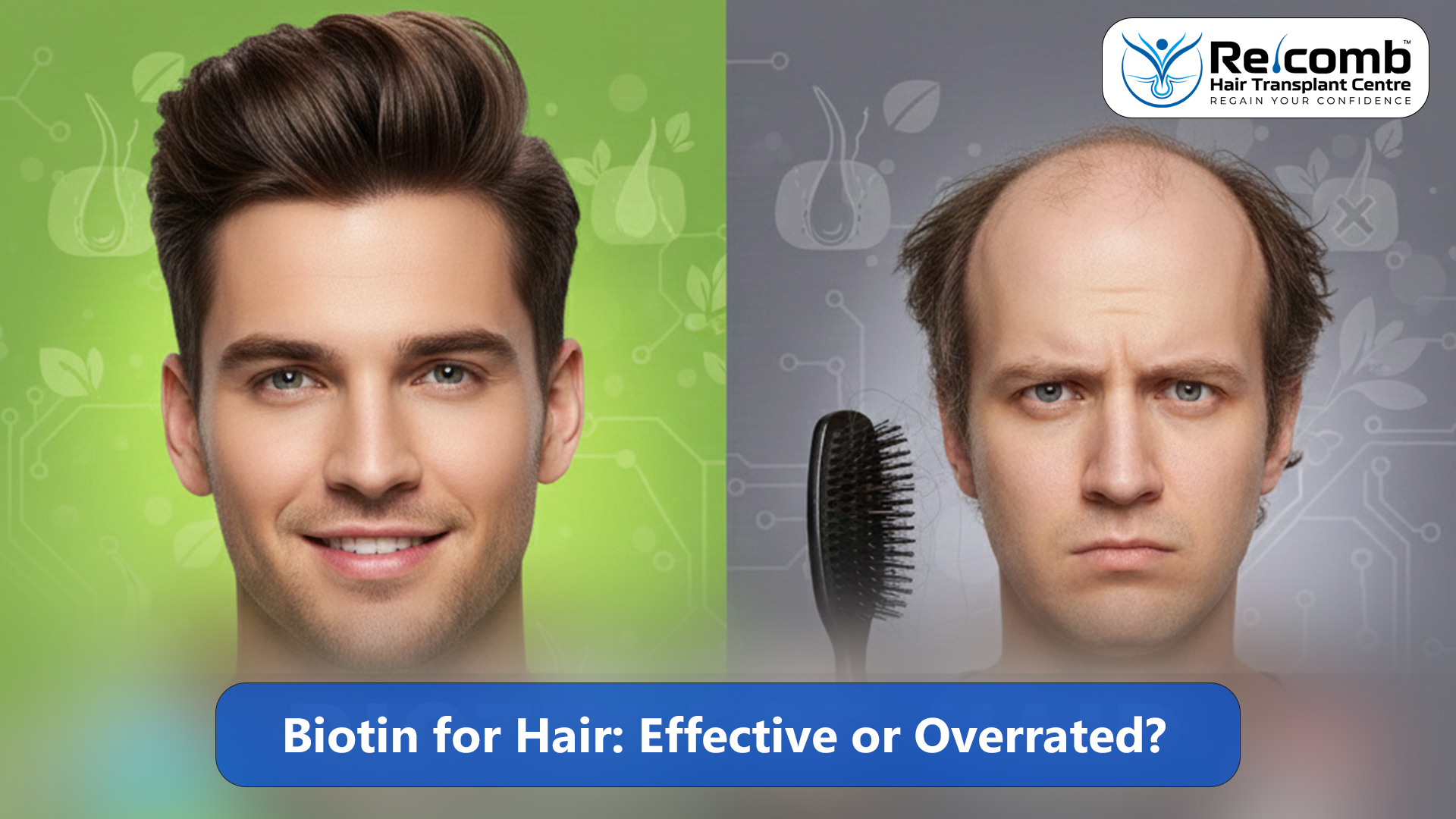
Biotin supplements are among the most commonly used products for hair fall. Social media, influencers, and over-the-counter brands often promote biotin as a “hair growth vitamin.”
But the real question is:
Does biotin actually regrow hair, or is it overrated?
At RECOMB Hair Transplant Centre, Surat, we rely on medical evidence rather than trends. This article explains what biotin truly does, who actually benefits from it, and when it does absolutely nothing.
What Is Biotin?
Biotin (Vitamin B7) is a water-soluble B-complex vitamin that plays a role in:
-
Keratin production
-
Fat and protein metabolism
-
Hair shaft strength
-
Nail and skin health
It is an essential nutrient, but not a growth hormone.
What Biotin Can Actually Do for Hair
Biotin helps hair only if there is a deficiency.
In biotin-deficient individuals, supplementation can:
-
Reduce hair breakage
-
Improve hair shaft thickness
-
Improve nail strength
-
Reduce diffuse shedding
This improvement happens because hair quality improves, not because new follicles are created.
When Biotin Is Truly Effective
Biotin works best in patients with:
-
Poor dietary intake
-
Digestive disorders
-
Long-term antibiotic use
-
Pregnancy-related deficiency
-
Brittle hair and nails
In these cases, biotin acts as a corrective therapy, not a growth stimulant.
When Biotin Is Overrated
Biotin is overrated in the following situations:
1. Androgenetic Alopecia (Male or Female Pattern Hair Loss)
Biotin does not block DHT and cannot stop genetic hair loss.
2. Receding Hairline or Crown Baldness
Biotin cannot regrow hair where follicles are already miniaturized or dead.
3. Post-Hair Transplant Expectations
Biotin does not improve graft survival or density significantly.
4. Normal Biotin Levels
If blood levels are normal, extra biotin provides no added benefit.
Scientific Reality: What Studies Show
Clinical research shows:
-
Biotin deficiency is rare
-
Routine supplementation in non-deficient individuals shows minimal hair growth benefit
-
No strong evidence supports biotin as a standalone hair loss treatment
This is why most dermatology guidelines do not recommend routine biotin supplementation for pattern hair loss.
Why Biotin Became So Popular
Biotin became popular because:
-
It is inexpensive
-
It is safe at moderate doses
-
It improves nail strength (visible effect)
-
Marketing labels it as a “hair vitamin”
This led to the misconception that more biotin equals more hair, which is medically incorrect.
Can Excess Biotin Be Harmful?
Yes, excessive biotin can:
-
Interfere with blood test results (thyroid, cardiac markers)
-
Cause acne-like breakouts in some patients
-
Give false reassurance while real hair loss progresses
This is why long-term high-dose biotin without diagnosis is discouraged.
Better Alternatives to Biotin for Hair Loss
At RECOMB, biotin is never used alone for hair loss. More effective approaches include:
-
Treating the underlying cause (DHT, inflammation, deficiency)
-
Medical therapy for pattern hair loss
-
Nutritional correction based on blood tests
-
Hair transplant when follicles are permanently lost
Biotin may be included only if deficiency is documented.
RECOMB’s Evidence-Based View on Biotin
At RECOMB Hair Transplant Centre, our approach is simple:
-
Test before treating
-
Prescribe biotin only when needed
-
Focus on root causes, not supplements
-
Avoid unnecessary long-term pills
Biotin is a supporting nutrient, not a hair loss cure.
Final Medical Conclusion
Biotin is effective only when there is a deficiency.
For most people with genetic hair loss, receding hairlines, or bald patches, biotin is overrated.
Healthy hair growth requires:
-
Correct diagnosis
-
Targeted treatment
-
Medical or surgical intervention when necessary
At RECOMB, we believe in science-based hair restoration, not supplement myths.
Contact RECOMB Hair Transplant Centre
Phone: +91 7624008000
Website: www.recombhair.com