
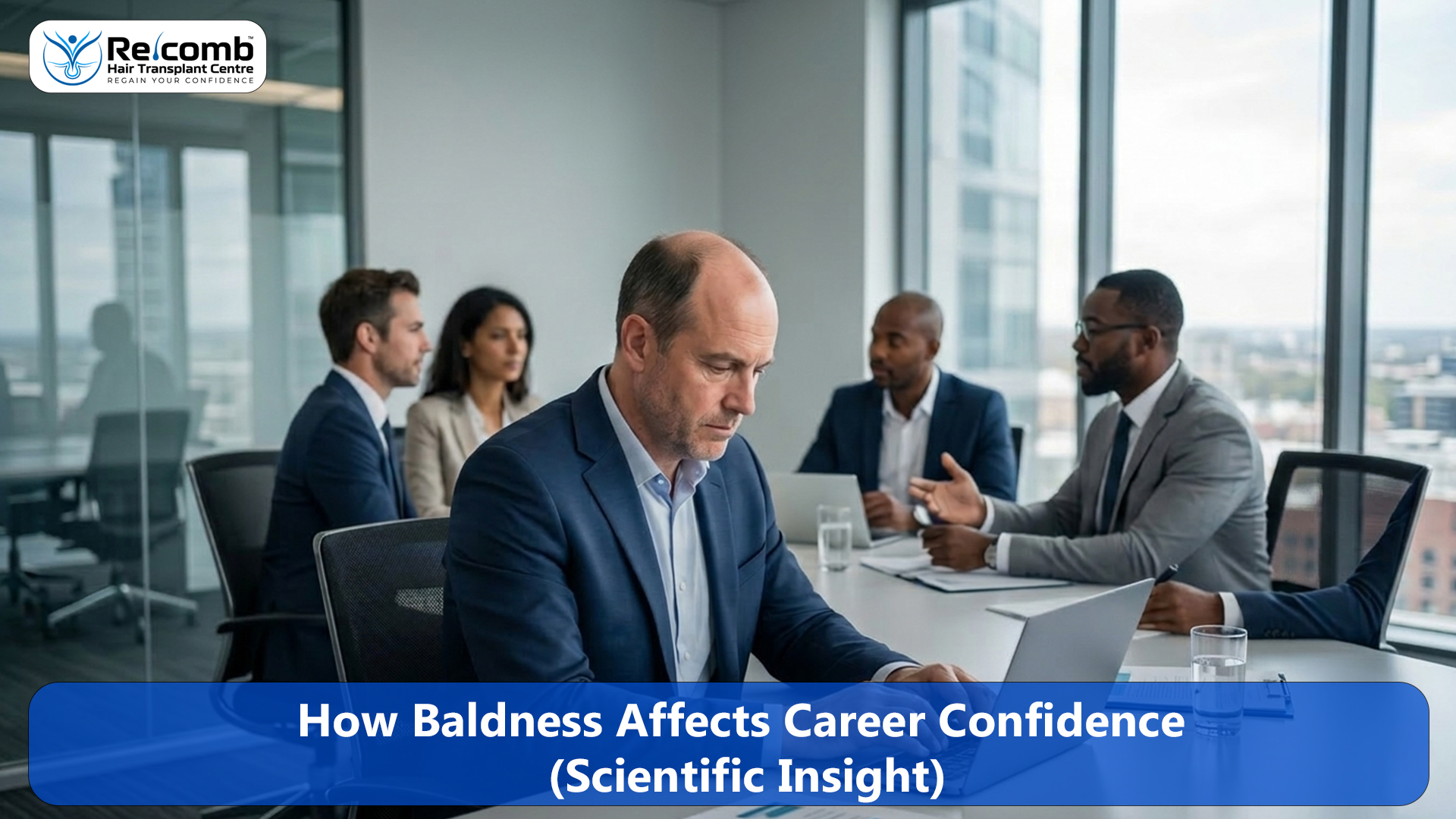
Hair loss is usually discussed as a cosmetic concern, but research shows it can also influence self-perception, social confidence, and professional interactions.
Many individuals experiencing baldness report feeling less confident in environments where appearance plays a subtle role, such as job interviews, leadership roles, and public-facing professions.
At RECOMB Hair Transplant Centre, consultations often reveal that patients are not only concerned about appearance but also about how hair loss affects their confidence at work.
Understanding the psychological dimension of hair loss helps explain why many people seek treatment.
The Role of Appearance in Professional Perception
Human perception is influenced by visual cues.
Studies in social psychology suggest that people often associate physical characteristics with qualities such as:
- Youthfulness
- Energy
- Leadership potential
- Approachability
Hair plays a visible role in these perceptions.
Although baldness itself does not determine professional capability, it can affect how individuals feel about their own appearance, which may influence confidence in professional settings.
Self-Confidence and Workplace Performance
Confidence is closely linked with workplace performance.
Employees who feel confident often demonstrate:
- Stronger communication
- Better presentation skills
- Higher leadership presence
- Increased willingness to participate in discussions
When individuals become self-conscious about hair loss, they may feel less comfortable in situations such as:
- Public speaking
- Client meetings
- Video conferences
- Networking events
These psychological effects vary widely between individuals.
Research on Hair Loss and Self-Esteem
Several studies have explored the psychological impact of hair loss.
Findings suggest that hair loss can affect:
- Body image
- Self-esteem
- Social confidence
In younger individuals, especially those experiencing early hair loss, the emotional impact can be more pronounced.
The psychological effect often depends on factors such as personality, cultural perception of appearance, and personal expectations.
Age and Perception of Hair Loss
The emotional response to baldness can differ depending on age.
Early-Onset Hair Loss
Hair loss in the 20s or early 30s can sometimes feel unexpected.
Individuals may compare themselves with peers who still have full hair, which may increase self-awareness.
Later-Onset Hair Loss
Hair thinning in the 40s or 50s is more common and often perceived as part of natural aging.
In these cases, the emotional impact may be less significant for many people.
Social and Professional Environments
The effect of hair loss on confidence can also depend on professional context.
In careers involving:
- Public interaction
- Media exposure
- Sales and marketing
- Corporate leadership
appearance can sometimes influence personal confidence and presentation style.
However, many successful professionals confidently embrace baldness and focus on their skills and expertise.
Coping with Hair Loss Psychologically
People respond to hair loss in different ways.
Some individuals:
- Accept and adapt to their appearance
- Modify hairstyles or grooming choices
- Focus on overall fitness and style
Others choose to explore medical treatments to maintain or restore hair.
Both approaches are personal decisions.
Medical Options for Managing Hair Loss
Modern treatments offer several options depending on the stage of hair loss.
These may include:
- Medical therapy to slow hair loss
- Regenerative treatments to support follicle health
- Hair transplant procedures for permanent restoration
The goal of treatment is often to restore both appearance and confidence.
The Importance of Realistic Expectations
Regardless of the treatment approach, realistic expectations are essential.
Hair restoration should aim to:
- Improve natural appearance
- Preserve existing hair
- Maintain long-term balance
A well-planned treatment strategy can support both aesthetic and psychological outcomes.
RECOMB’s Patient-Centered Perspective (2026)
At RECOMB, consultations focus on understanding each patient’s goals and concerns.
Treatment planning considers:
- Medical diagnosis
- Stage of hair loss
- Lifestyle and professional needs
- Long-term hair restoration strategy
Hair restoration is not only about appearance but also about supporting overall confidence.
Final Takeaway
Hair loss does not define professional ability or career success.
However, it can influence self-confidence and personal perception in certain situations.
Understanding the psychological aspects of baldness allows individuals to make informed decisions about managing hair loss—whether through acceptance, lifestyle changes, or medical treatment.
Contact RECOMB Hair Transplant Centre
Phone: +91 7624008000
Website: www.recombhair.com