
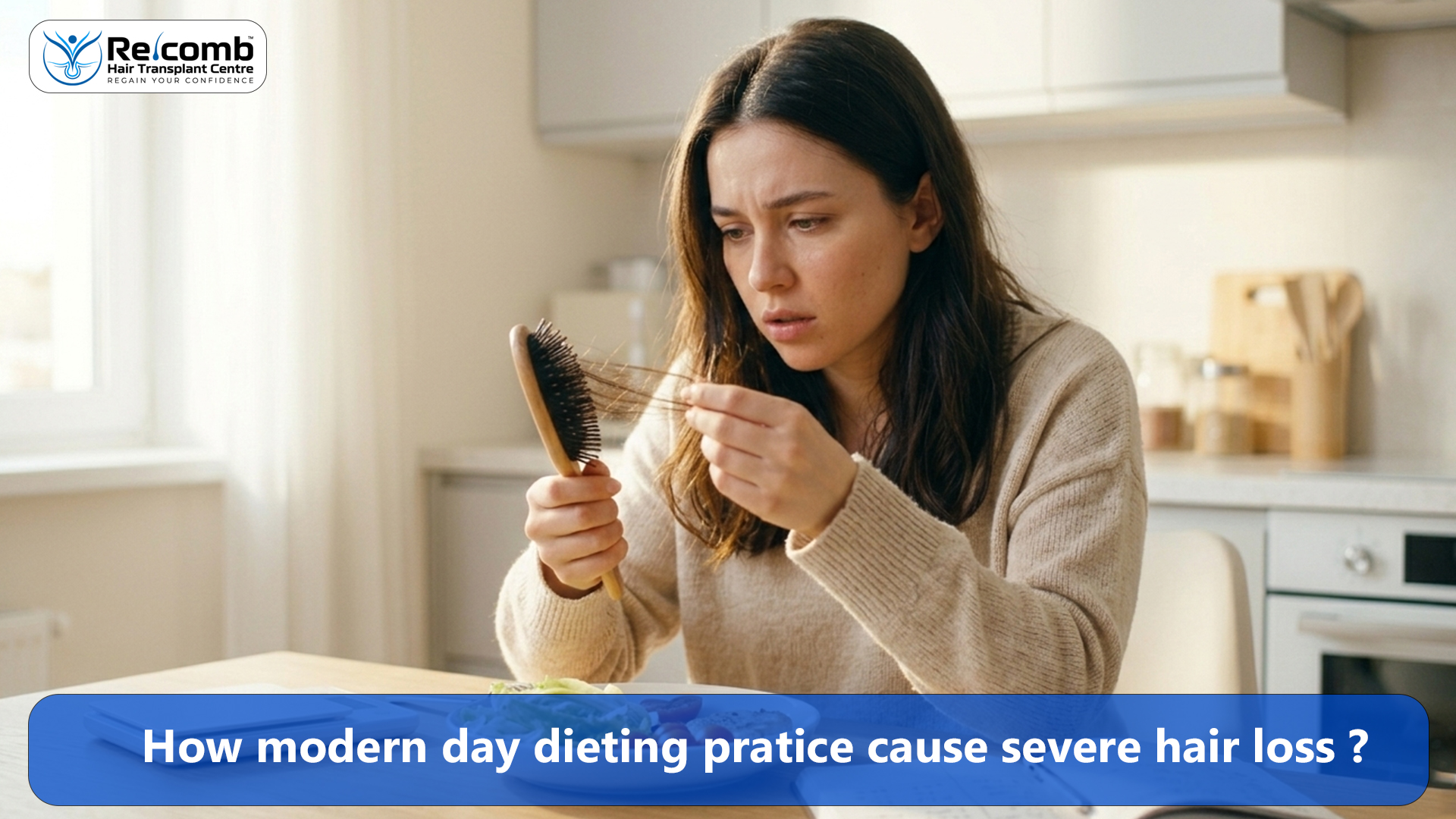
In recent years, dieting trends such as intermittent fasting, keto diets, detox diets, and extreme calorie restriction have become extremely popular. Many people adopt these practices to lose weight quickly or improve metabolic health.
However, dermatologists are increasingly observing a side effect that many people do not anticipate:
Severe hair fall after dieting.
At RECOMB Hair Transplant Centre, many patients report sudden hair shedding a few months after significant weight loss.
Understanding why this happens requires understanding how hair growth works.
Why Hair Is Sensitive to Diet
Hair follicles are among the most metabolically active structures in the body.
They require:
-
Adequate protein
-
Iron and ferritin
-
Zinc
-
Vitamins (especially B-complex and vitamin D)
-
Stable energy supply
When the body experiences nutritional stress, hair growth is one of the first processes that slows down.
The body prioritizes essential organs like the brain and heart, reducing resources available for hair production.
The Hair Growth Cycle
Hair grows in three phases:
Anagen (growth phase)
Lasts 2–6 years.
Catagen (transition phase)
Short phase where growth stops.
Telogen (resting phase)
Hair eventually sheds.
Severe dieting can push large numbers of hairs into the telogen phase, resulting in excessive shedding.
This condition is known as telogen effluvium.
How Crash Dieting Triggers Hair Loss
1. Sudden Calorie Restriction
Very low-calorie diets shock the body.
When calorie intake drops drastically:
-
Energy supply to hair follicles decreases
-
Hair growth slows
-
Shedding begins within 2–3 months
Rapid weight loss often correlates with severe hair fall.
2. Protein Deficiency
Hair is primarily made of keratin, a protein.
When dieting eliminates protein sources such as:
-
Eggs
-
Meat
-
Dairy
-
Pulses
Hair follicles cannot produce strong strands.
Low protein intake can trigger diffuse hair thinning.
3. Iron and Ferritin Deficiency
Many restrictive diets reduce intake of iron-rich foods.
Low ferritin levels are strongly linked to hair loss.
Common signs include:
-
Excessive shedding
-
Fatigue
-
Weak nails
Correcting ferritin often improves hair growth.
4. Vitamin Deficiencies
Dieting without nutritional planning can lead to deficiencies such as:
-
Vitamin D deficiency
-
B12 deficiency
-
Zinc deficiency
These nutrients play important roles in follicle health.
5. Hormonal Changes
Extreme dieting can disrupt hormonal balance.
Hormonal fluctuations can trigger:
-
Hair thinning
-
Increased shedding
-
Changes in hair growth cycles
This is particularly common in women undergoing rapid weight loss.
Popular Diet Trends Linked to Hair Loss
Certain dieting patterns have been associated with hair fall when poorly planned:
Crash diets
Rapid weight loss programs.
Detox diets
Juice-based diets lacking protein.
Extreme keto diets
Low carbohydrate intake affecting metabolism.
Prolonged fasting
Insufficient nutrient intake over time.
These diets may produce quick weight loss but can stress the body significantly.
When Does Diet-Related Hair Loss Start?
Hair shedding usually appears:
2–3 months after dieting begins.
This delay occurs because the hair cycle shifts gradually.
Many patients do not immediately link their hair loss to their diet.
Is Diet-Related Hair Loss Permanent?
Fortunately, most diet-related hair loss is temporary.
Once the underlying nutritional deficiency is corrected:
-
Hair growth cycle normalizes
-
Shedding reduces
-
New hair begins to grow
Recovery may take 3–6 months.
How to Prevent Hair Loss During Weight Loss
Healthy weight loss should always include:
-
Balanced protein intake
-
Adequate iron and micronutrients
-
Gradual calorie reduction
-
Proper hydration
-
Medical supervision if necessary
Slow and sustainable weight loss is safer for hair health.
When to See a Doctor
If hair shedding continues for several months after dieting, evaluation may be necessary.
Doctors may check:
-
Ferritin levels
-
Vitamin D
-
Thyroid function
-
Nutritional deficiencies
Early diagnosis prevents long-term hair thinning.
RECOMB’s Approach to Diet-Related Hair Loss (2026)
At RECOMB, diet-related hair loss is evaluated carefully to identify underlying triggers.
Treatment may include:
-
Nutritional correction
-
Medical therapy if needed
-
Scalp health support
-
Monitoring hair regrowth
The goal is to restore healthy hair growth while addressing the root cause.
Final Takeaway
Modern dieting practices can cause severe hair loss when they deprive the body of essential nutrients.
Crash dieting may lead to:
-
Protein deficiency
-
Iron deficiency
-
Hormonal disruption
-
Telogen effluvium
Weight loss should always be gradual and nutritionally balanced to protect overall health—including hair.
Contact RECOMB Hair Transplant Centre
Phone: +91 7624008000
Website: www.recombhair.com