
One of the most common questions patients ask is:
“Is my hair loss due to poor nutrition, or is it genetic?”
This confusion leads many people to rely on supplements, oils, or diet changes—often while ignoring the real cause. The truth is more nuanced.
At RECOMB Hair Transplant Centre, we see daily evidence that nutrition and genetics play very different roles in hair loss, and understanding this difference is critical for choosing the right treatment.
Understanding Genetic Hair Loss
What Is Genetic Hair Loss?
Genetic hair loss, medically called androgenetic alopecia, is caused by:
-
Genetic sensitivity of hair follicles to DHT (dihydrotestosterone)
-
Progressive miniaturization of follicles
-
Predictable patterns (hairline, temples, crown)
This type of hair loss:
-
Is inherited
-
Progresses over time
-
Does not reverse with diet alone
Key Features of Genetic Hair Loss
-
Gradual thinning, not sudden shedding
-
Receding hairline or crown thinning
-
Strong family history
-
Permanent follicle damage over time
Once follicles miniaturize beyond a point, no nutrition can revive them.
Understanding Nutrition-Related Hair Loss
How Nutrition Affects Hair
Hair is a non-essential tissue. When the body lacks nutrients, hair growth is one of the first processes to slow down.
Nutritional deficiencies can cause:
-
Telogen effluvium (diffuse shedding)
-
Weak, brittle hair
-
Reduced hair thickness
-
Temporary thinning
This type of hair loss is usually reversible.
Common Nutritional Causes of Hair Loss
-
Iron deficiency and low ferritin
-
Vitamin D deficiency
-
Protein deficiency
-
Zinc deficiency
-
Crash dieting or extreme weight loss
-
Malabsorption or gut issues
Correcting these deficiencies often restores hair growth.
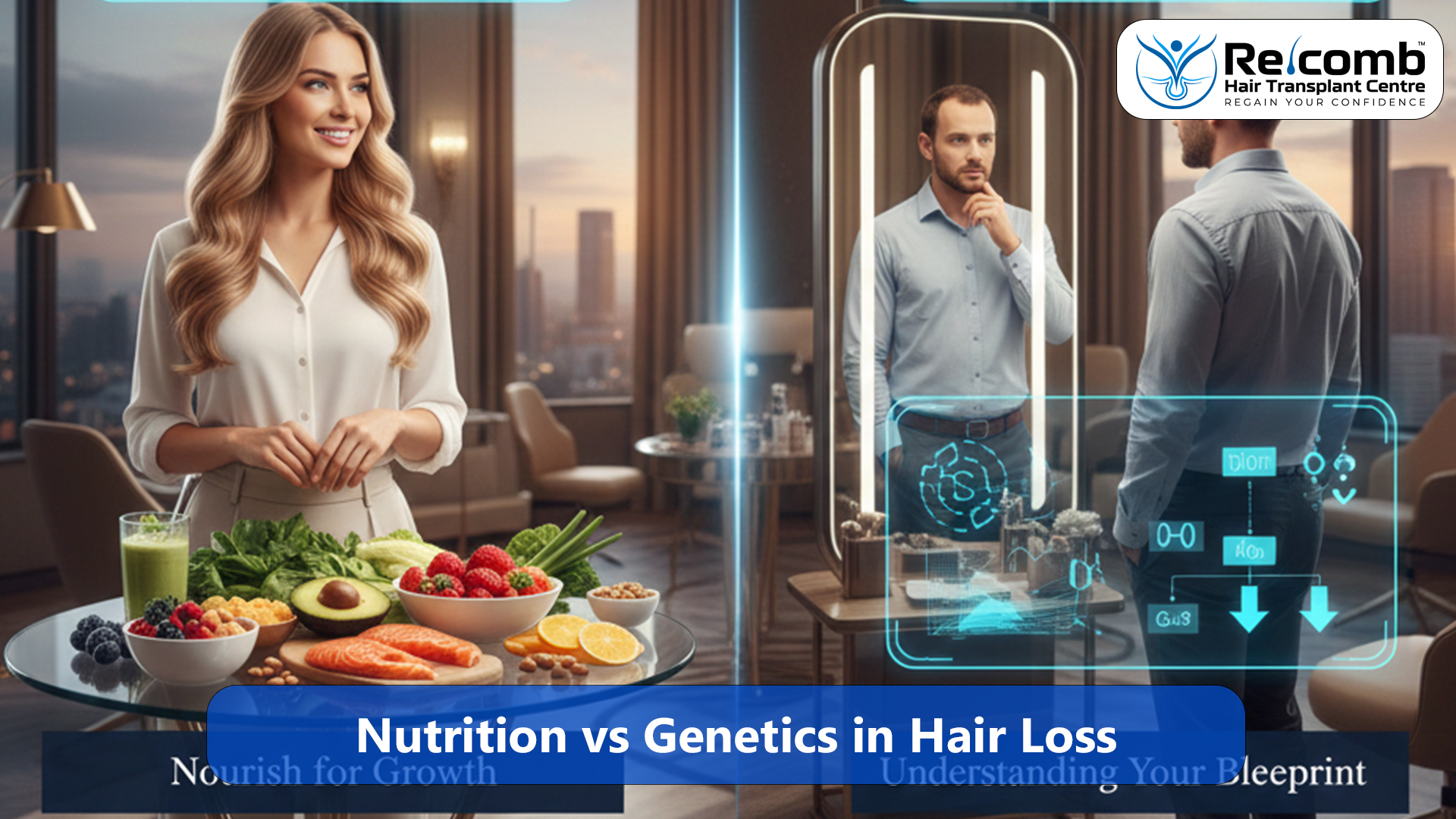
Nutrition vs Genetics: The Core Difference
| Factor | Nutritional Hair Loss | Genetic Hair Loss |
|---|---|---|
| Onset | Sudden | Gradual |
| Pattern | Diffuse | Patterned |
| Reversibility | High | Progressive |
| Hairline | Preserved | Recedes |
| Bald Patches | No | Yes (advanced) |
| Cure with Diet | Often | No |
This distinction is crucial for treatment planning.
Can Poor Nutrition Cause Permanent Baldness?
No.
Poor nutrition can cause heavy shedding, but it does not permanently destroy hair follicles.
However, if nutritional hair loss is ignored for a long time, it can:
-
Unmask underlying genetic baldness
-
Accelerate visible thinning
-
Reduce overall hair volume
Nutrition may act as a trigger, not the root cause.
Why Supplements Often Disappoint Patients
Many patients take:
-
Biotin
-
Multivitamins
-
Hair gummies
without testing for deficiencies.
If genetics is the main cause:
-
Supplements show little or no improvement
-
Hairline continues to recede
-
Crown keeps thinning
This leads to frustration and delayed medical care.
Can Good Nutrition Stop Genetic Hair Loss?
No.
Good nutrition:
-
Improves hair quality
-
Reduces breakage
-
Supports overall scalp health
But it cannot block DHT or stop follicle miniaturization.
Genetic hair loss requires medical or surgical intervention, not diet alone.
When Nutrition and Genetics Coexist
In real life, many patients have both:
-
Genetic predisposition
-
Nutritional deficiency
In such cases:
-
Nutrition correction reduces shedding
-
Medical therapy slows genetic progression
-
Combined treatment gives the best results
Ignoring either factor leads to incomplete outcomes.
Correct Treatment Approach Based on Cause
If Nutrition Is the Main Cause
-
Blood tests and diagnosis
-
Correct deficiencies
-
Balanced diet
-
Temporary supportive therapy
If Genetics Is the Main Cause
-
Medical therapy to slow progression
-
PRP or GFC for follicle support
-
Hair transplant for permanent bald areas
If Both Are Present
-
Combined, staged approach
-
Long-term planning
-
Regular monitoring
Why Hair Transplant Is Not a Nutritional Solution
Hair transplant:
-
Replaces lost follicles
-
Does not treat nutritional deficiencies
-
Requires healthy scalp and donor area
This is why nutrition must be optimized before and after surgery, but surgery is not a substitute for diet correction.
RECOMB’s Evidence-Based Perspective (2026)
At RECOMB, our diagnostic approach includes:
-
Scalp and pattern assessment
-
Family history evaluation
-
Blood tests when required
-
Honest explanation of limitations
We do not blame genetics for everything, and we do not over-sell nutrition.
Final Medical Conclusion
-
Nutrition controls hair quality and temporary shedding
-
Genetics controls hair survival and permanent loss
-
Nutrition can improve hair—but cannot defeat genetics
-
Genetics can be managed—but not ignored
The key to saving hair is correct diagnosis, not guesswork.
Contact RECOMB Hair Transplant Centre
Phone: +91 7624008000
Website: www.recombhair.com