
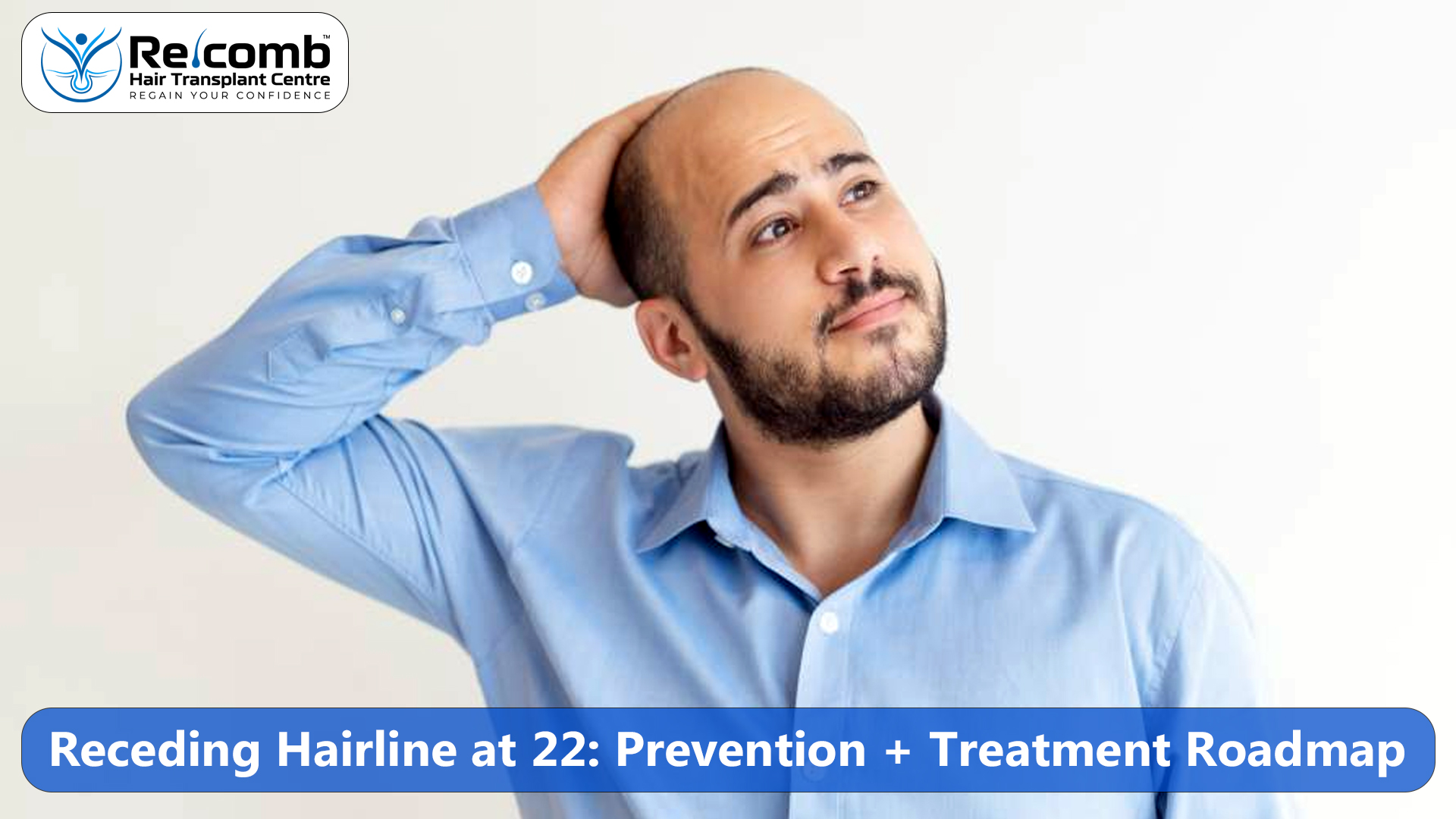
A receding hairline at age 22 can feel alarming and unexpected. However, early frontal hair thinning is extremely common in men due to genetics, hormones, and lifestyle factors. The positive news is that early-stage hairline recession is highly treatable, especially when addressed within the first 1–2 years of onset.
At Recomb Hair Transplant Centre, Surat, we see hundreds of young adults with early hairline recession and provide targeted, long-term solutions based on medical evaluation, scalp analysis, and genetic patterns.
Why Does a Hairline Recede at 22?
1. Genetics (Androgenetic Alopecia)
This is the number one cause. If your father, uncle, or grandfather had a receding hairline, you are more likely to experience it early.
This occurs due to DHT (Dihydrotestosterone) sensitivity, which shrinks hair follicles.
2. Stress & Sleep Irregularities
High stress increases cortisol levels, which disrupts the hair cycle and leads to early miniaturization.
3. Nutritional Deficiency
Low levels of vitamin D, B12, ferritin, and zinc are extremely common in young adults and directly weaken the hairline.
4. Hairstyles & Grooming Habits
Tight ponytails, frequent styling, or vigorous rubbing cause traction and mechanical damage.
5. Hormonal Fluctuations
Changes in testosterone and DHT levels during late teens and early twenties accelerate frontal hair loss in genetically predisposed individuals.
Signs of an Early Receding Hairline
-
Thinning at temples
-
M-shaped hairline
-
More visible scalp near the forehead
-
One side receding faster than the other
-
Rapid shedding around the front
Early detection is essential because the first 6–18 months offer the best window for recovery.
Prevention Plan for a Receding Hairline at 22
1. Start Medical Treatment Early
Medications help stabilize the hairline and prevent further recession.
Recommended options include:
-
DHT blockers (as medically prescribed)
-
Topical growth stimulators
-
Nutritional support based on blood tests
2. Reduce Stress & Improve Sleep Quality
Sleeping 7–8 hours daily reduces cortisol and improves hair cycle stability.
3. Avoid Heavy Hairstyles and Friction
Loose grooming and gentle towel drying can reduce mechanical hairline damage.
4. Fix Deficiencies Through Blood Tests
Check for vitamin D, B12, ferritin, zinc, and thyroid function.
Nutrition correction improves thickness and reduces shedding.
Treatment Options at Recomb Hair Transplant Centre
1. GFC Therapy
A highly concentrated, next-generation growth factor treatment that strengthens follicles and reverses early miniaturization.
Ideal for: early recession and thinning.
2. PRP Therapy
Platelet-rich plasma strengthens weak follicles.
Useful for mild recession or early androgenetic alopecia.
3. Laser Hair Stimulation
Improves blood flow, reduces inflammation, and enhances the effect of other therapies.
4. Microneedling with Growth Serums
Improves penetration of growth agents and stimulates collagen around follicles.
5. Sapphire FUE Hair Transplant (If Recession Is Advanced)
If recession has already formed a clear M-shape or the temples have lost density, a hairline restoration transplant provides a permanent solution.
Sapphire blades ensure:
-
Natural angles
-
High density
-
Faster healing
-
Minimal scars
What Is the Best Age for a Hair Transplant?
A transplant can be done at 22–23 if:
-
Baldness pattern is stable
-
There is documented miniaturization
-
The patient is under medical therapy
-
The hairline design is conservative
At Recomb, we analyze family history, donor area, and scalp mapping before recommending a transplant for young patients.
Long-Term Maintenance Strategy
-
Follow a customized medical plan
-
Avoid over-shampooing or heavy oiling
-
Perform yearly scalp check-ups
-
Maintain balanced vitamin levels
-
Continue low-dose maintenance therapy based on medical advice
This ensures the hairline stays strong for decades.
Contact Recomb Hair Transplant Centre
Phone: +91 7624008000
Website: www.recombhair.com