
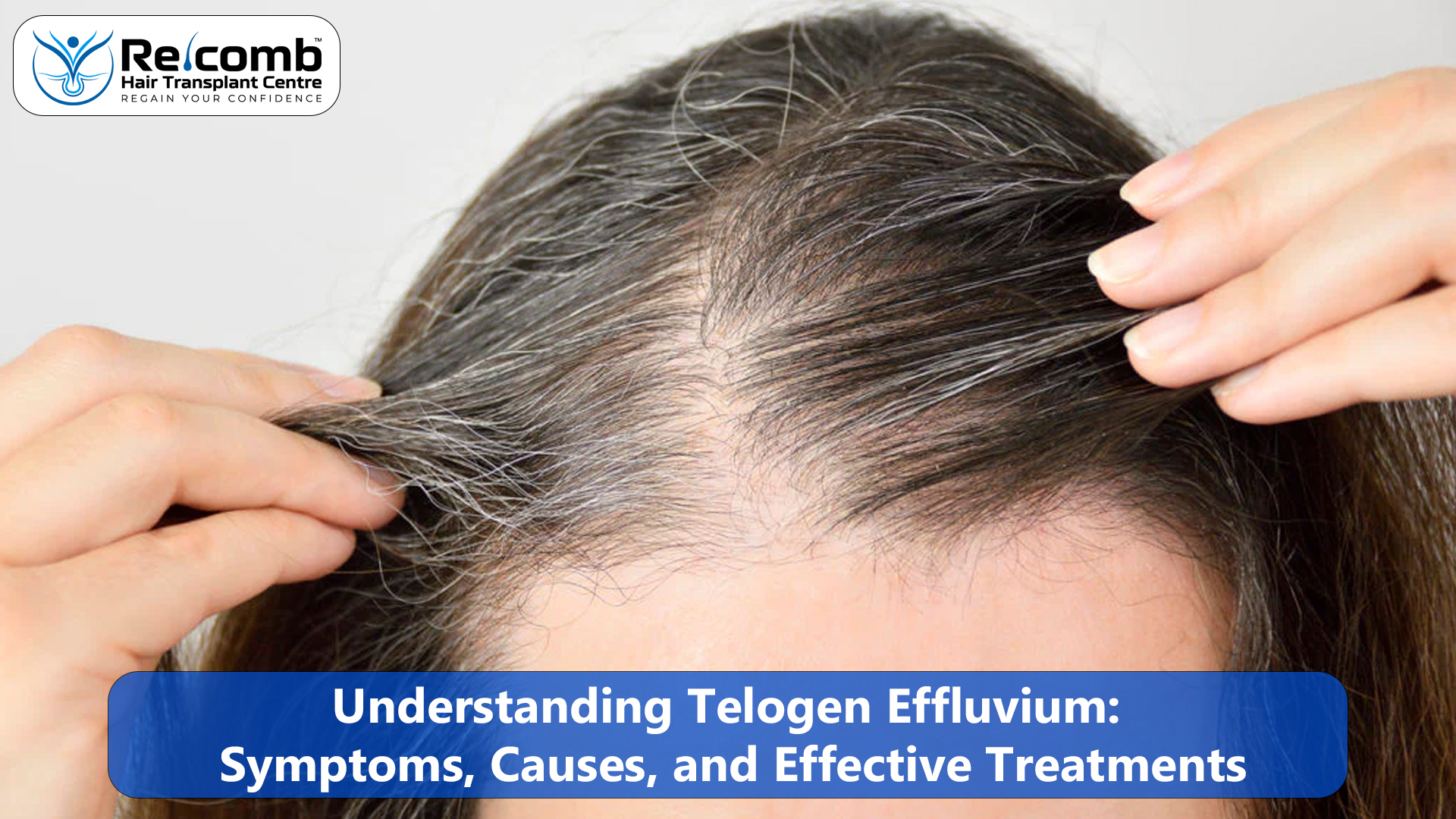
Sudden hair fall can be frightening—especially when large amounts of hair appear on your pillow, bathroom floor, or hairbrush. Many people immediately fear permanent baldness. In reality, one of the most common causes of sudden hair fall is Telogen Effluvium, a condition that is usually reversible.
At RECOMB Hair Transplant Centre, Surat, telogen effluvium is one of the most frequently diagnosed hair loss conditions. Correct diagnosis is critical because treating telogen effluvium like genetic baldness can lead to unnecessary anxiety and wrong treatment choices.
What Is Telogen Effluvium?
Telogen effluvium (TE) is a hair cycle disorder, not a disease of the hair follicle itself.
Normally:
-
85–90% of hair is in the growth (anagen) phase
-
10–15% is in the resting (telogen) phase
In telogen effluvium:
-
A large number of hairs prematurely shift into the telogen phase
-
These hairs shed together after 2–3 months
Importantly, the hair follicles remain alive, which means regrowth is possible.
Key Symptoms of Telogen Effluvium
Common signs include:
-
Sudden excessive hair fall
-
Diffuse shedding across the scalp
-
Hair fall while washing or combing
-
Thinning ponytail or reduced volume
-
No defined bald patches
-
Normal-looking scalp
Hairline usually remains intact, which helps differentiate it from pattern baldness.
What Causes Telogen Effluvium?
Telogen effluvium is usually triggered by a physical or emotional stressor that occurred 2–3 months earlier.
1. Severe Emotional Stress
-
Anxiety
-
Grief
-
Trauma
-
Major life events
2. Illness or High Fever
-
Viral infections
-
Dengue, typhoid
-
COVID-19
-
Post-hospitalization
3. Nutritional Deficiencies
-
Iron deficiency
-
Low ferritin
-
Vitamin D deficiency
-
Crash dieting or extreme weight loss
4. Hormonal Changes
-
Post-pregnancy hair loss
-
Thyroid disorders
-
Stopping oral contraceptive pills
5. Surgery or Major Physical Trauma
-
Any surgery under anesthesia
-
Blood loss
-
Prolonged illness
6. Medications
Certain drugs can trigger telogen effluvium, especially when started or stopped abruptly.
Acute vs Chronic Telogen Effluvium
Acute Telogen Effluvium
-
Lasts less than 6 months
-
Trigger is identifiable
-
Full regrowth expected
Chronic Telogen Effluvium
-
Lasts longer than 6 months
-
Often seen in women
-
May fluctuate over years
-
Requires long-term monitoring
How Telogen Effluvium Is Diagnosed
At RECOMB, diagnosis includes:
-
Detailed medical and stress history
-
Hair pull test
-
Scalp examination
-
Trichoscopy
-
Blood tests if required
Correct diagnosis avoids unnecessary treatments like hair transplant or long-term medications.
Effective Treatments for Telogen Effluvium
1. Identify and Correct the Trigger
This is the most important step. Hair fall improves only after the underlying cause is addressed.
2. Nutritional Correction
-
Iron supplementation if deficient
-
Vitamin D correction
-
Balanced protein intake
-
Avoid crash dieting
3. Medical Support
-
Gentle topical treatments if needed
-
Short-term growth support
-
Avoid aggressive treatments
Minoxidil is not mandatory in all cases.
4. PRP or GFC (Selected Cases)
Used when:
-
Hair fall is prolonged
-
Recovery is slow
-
There is overlap with genetic hair loss
These therapies support faster follicle recovery but are not always required.
What NOT to Do in Telogen Effluvium
-
Panic and over-treat
-
Start multiple supplements blindly
-
Undergo hair transplant
-
Aggressively dermaroll
-
Switch products frequently
Over-treatment can delay recovery.
How Long Does Hair Take to Regrow?
Typical timeline:
-
Hair fall peaks for 2–3 months
-
Shedding gradually reduces
-
Regrowth starts by 3–4 months
-
Visible volume improves by 6–9 months
Patience and correct guidance are essential.
Telogen Effluvium vs Pattern Hair Loss
| Feature | Telogen Effluvium | Pattern Baldness |
|---|---|---|
| Onset | Sudden | Gradual |
| Hair Fall | Diffuse | Patterned |
| Hairline | Preserved | Recedes |
| Follicles | Alive | Miniaturized |
| Reversibility | High | Progressive |
Many patients have both conditions together, which requires careful evaluation.
RECOMB’s Approach to Telogen Effluvium
At RECOMB Hair Transplant Centre, management focuses on:
-
Reassurance and education
-
Correct diagnosis
-
Minimal, targeted treatment
-
Avoiding unnecessary surgery
-
Monitoring regrowth
We treat telogen effluvium as a temporary disruption, not a cosmetic failure.
Final Medical Takeaway
Telogen effluvium is:
-
Common
-
Stress-related
-
Usually reversible
Early diagnosis prevents panic, wrong treatment, and long-term hair anxiety.
If you are experiencing sudden hair fall, the solution is understanding—not rushing into treatment.
Contact RECOMB Hair Transplant Centre
Phone: +91 7624008000
Website: www.recombhair.com