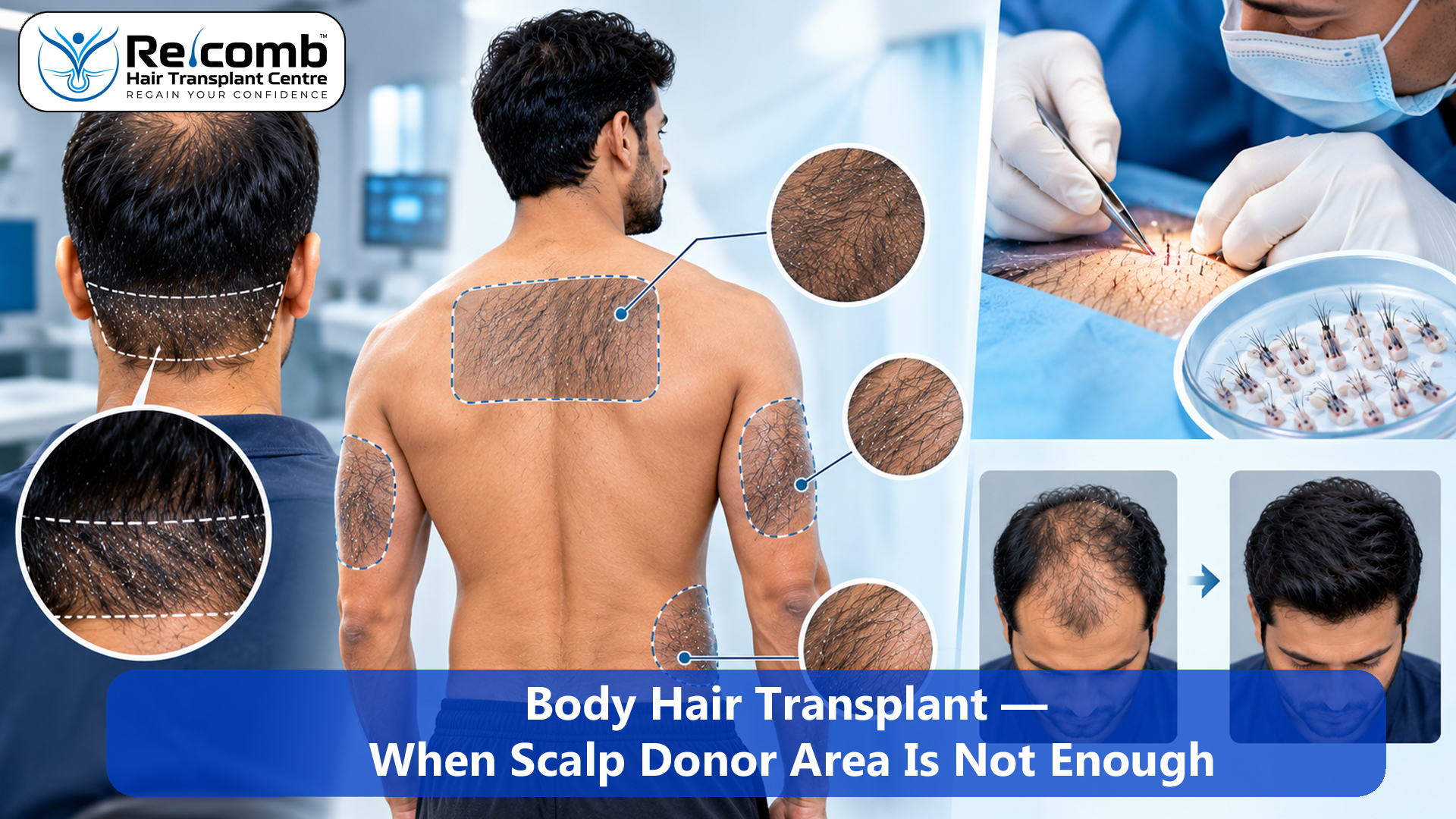

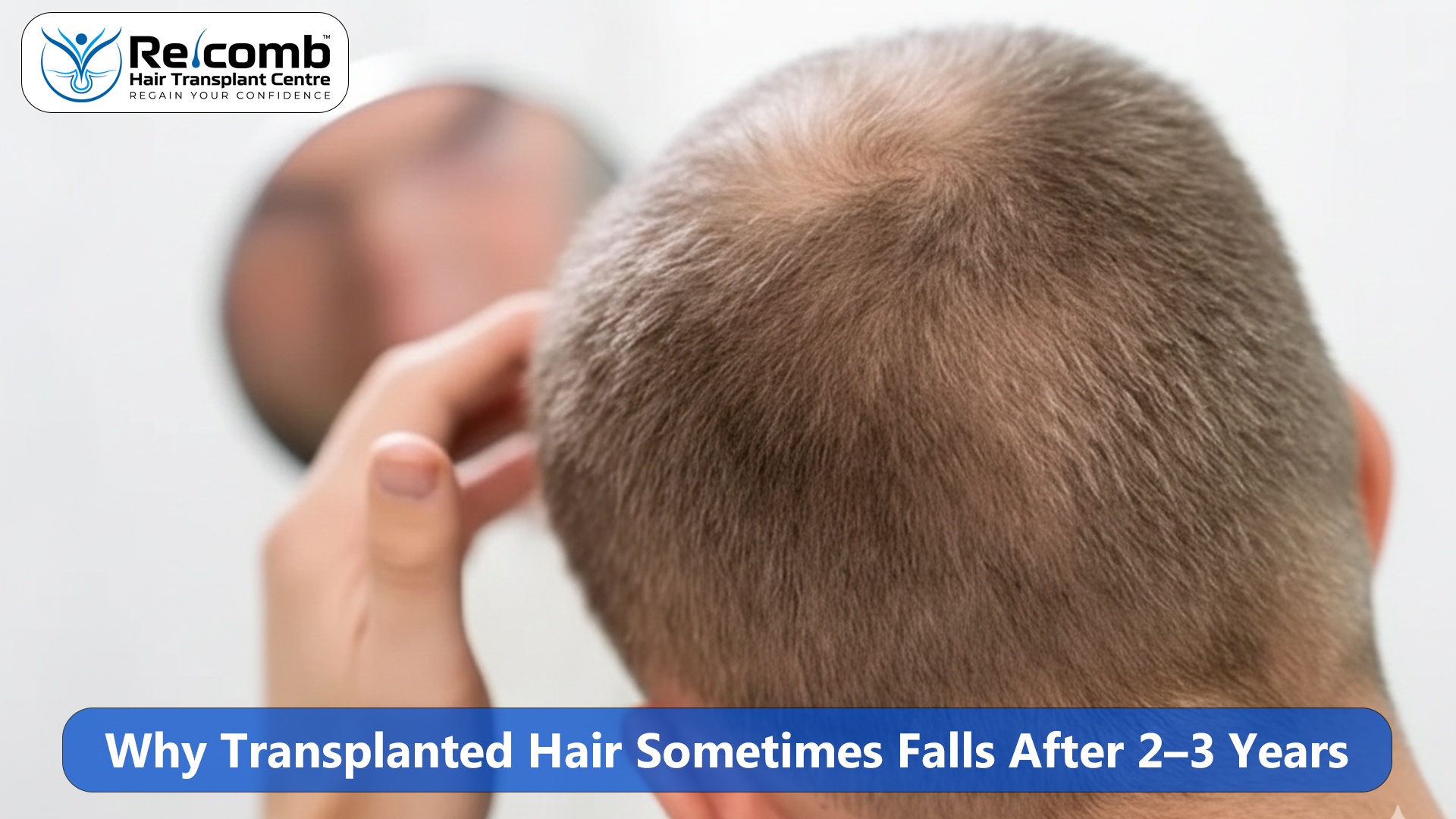
A hair transplant is designed to provide a permanent and natural solution to baldness. However, some individuals notice thinning or shedding again 2–3 years after the procedure.
This can be worrying, but in most cases, there are clear medical explanations and correctable factors behind this shedding.
At Recomb Hair Transplant Centre, Surat, we focus on long-term graft survival, donor safety, and medical maintenance to ensure that transplanted hair remains strong for decades.
Below are the 7 most common reasons transplanted hair can thin or fall after a few years.
1. Not Following Long-Term Medical Therapy
Hair transplant restores areas that are already bald, but the remaining native hair is still sensitive to DHT.
If medical therapy is stopped after 6–12 months, existing native hair may continue to thin, giving an impression that the transplant has failed.
Medical treatments help:
-
Maintain existing hair
-
Slow down genetic hair loss
-
Support transplanted hair growth
Without maintenance therapy, surrounding hair becomes weak and creates visible gaps.
2. Progression of Androgenetic Alopecia (Genetic Baldness)
DHT-driven hair loss is progressive.
Even if transplanted hair is permanent, your native hair will continue to miniaturize if not treated.
This often leads to:
-
Patchy appearance
-
Gaps behind the transplanted zone
-
Thinning in the crown or mid-scalp
Long-term management is essential to keep the entire scalp balanced.
3. Weak Donor Quality or Over-Harvesting
If the donor area was:
-
Low density
-
Miniaturized
-
Over-harvested
then the graft survival rate may drop after a few years.
A healthy donor region is the foundation of a long-lasting transplant.
4. Improper Technique or Poor Graft Handling
If grafts were damaged or mishandled during the procedure, survival may reduce over the years.
Problems include:
-
Excessive trauma
-
Incorrect angulation
-
Dehydration of grafts
-
Delayed implantation
At Recomb, Sapphire FUE ensures minimal trauma, high survival, and natural density.
5. Lifestyle Factors Influencing Hair Cycles
Factors that cause long-term miniaturization include:
-
High stress
-
Poor diet
-
Smoking
-
Sleep issues
-
Hormonal fluctuations
These accelerate shedding of both native and transplanted hair.
6. Underlying Medical Conditions
Conditions such as:
-
Thyroid imbalance
-
Vitamin D deficiency
-
Iron deficiency
-
Autoimmune disorders
can weaken hair roots and cause delayed shedding.
Regular blood panel testing is essential.
7. Rare: Donor Dominance Failure
This is extremely rare but occurs when transplanted hair loses its resistance to DHT.
It usually happens if:
-
Donor region had miniaturized follicles
-
Extraction happened outside the safe zone
This is preventable with proper donor mapping and safe-zone extraction.
How to Prevent Hair Fall 2–3 Years After a Transplant
1. Maintain a Long-Term Medical Plan
Includes:
-
DHT blockers (as medically prescribed)
-
Topical growth stimulators
-
Oral nutraceuticals
2. Annual Dermatology Review
To evaluate:
-
Progression of baldness
-
Scalp inflammation
-
Donor stability
3. Advanced Scalp Therapies
Regular sessions every 4–6 months:
-
PRP Therapy
-
Laser Hair Stimulation
Strengthen follicles and support growth cycles.
4. Healthy Lifestyle
Adequate sleep, balanced diet, and stress control promote long-term stability.
Conclusion
Transplanted hair is permanent, but native hair is not.
Most cases of hair fall after 2–3 years are due to progressive genetic baldness, lack of maintenance therapy, or untreated medical conditions.
With proper diagnosis and long-term management, density can be preserved and restored.
At Recomb Hair Transplant Centre, we create long-term hair care plans to ensure lifetime results after a Sapphire FUE procedure.
Contact Recomb Hair Transplant Centre
Phone: +91 7624008000
Website: www.recombhair.com