
Hair transplant is one of the most effective solutions for baldness—but not everyone is an ideal candidate.
Many patients rush into surgery due to marketing, social pressure, or frustration with hair loss. However, performing a transplant at the wrong time or in the wrong condition can lead to poor results, wasted grafts, and long-term regret.
At RECOMB Hair Transplant Centre, careful patient selection is a key part of achieving natural and sustainable outcomes.
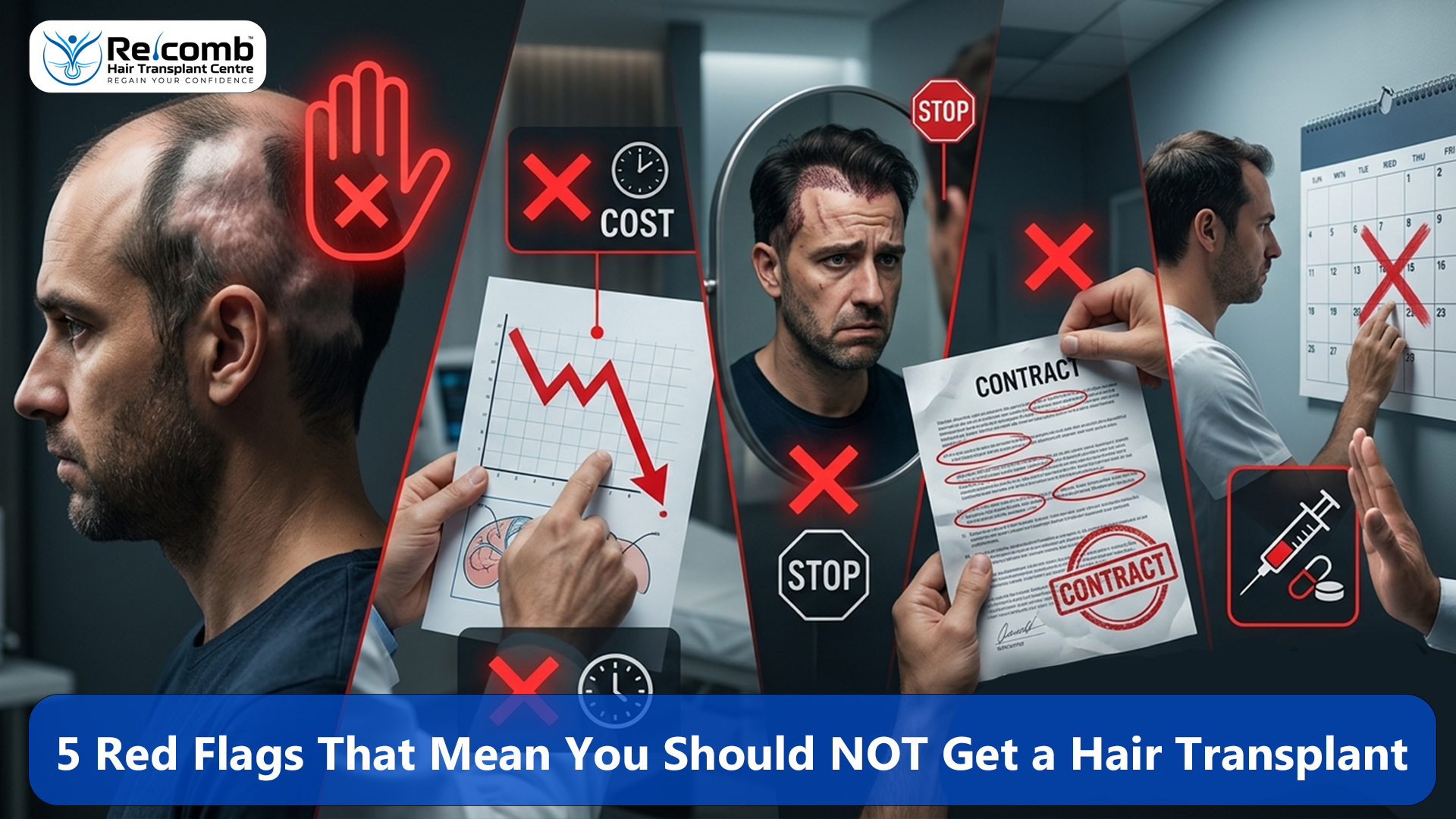
Here are 5 important red flags.
1. You Have Ongoing Rapid Hair Loss
If your hair loss is still actively progressing, especially at a young age:
- Hairline continues to recede
- Crown keeps expanding
- Density reduces quickly
Doing a transplant too early can result in:
- Transplanted hair in front
- Continued loss behind it
- Unnatural “island” appearance
What to Do Instead
Stabilize hair loss first with medical or regenerative treatment before considering surgery.
2. Poor Donor Area Quality
The donor area is your only source of permanent hair.
Red flags include:
- Low donor density
- Thin or weak hair
- Visible scalp at the back
- Previous overharvesting
If donor supply is weak, transplant may:
- Fail to provide good coverage
- Create patchy donor area
- Limit future options
What to Do Instead
Proper donor evaluation is essential before planning surgery.
3. Unrealistic Expectations
Some patients expect:
- Full teenage density
- One-session complete coverage
- Instant results
Hair transplant has limitations:
- Density is lower than natural hair
- Results take 10–12 months
- Donor supply is limited
Unrealistic expectations often lead to dissatisfaction—even after technically successful surgery.
What to Do Instead
Understand realistic outcomes and long-term planning.
4. Very Young Age (Early 20s with Unstable Pattern)
Hair loss at a young age is often:
- Aggressive
- Progressive
- Unpredictable
Early transplant without stabilization may require multiple surgeries later.
This increases:
- Cost
- Donor depletion risk
- Complexity of correction
What to Do Instead
Delay surgery and manage hair loss medically until the pattern stabilizes.
5. Medical or Scalp Conditions
Certain conditions can affect transplant success:
- Active scalp infections
- Severe dandruff or inflammation
- Autoimmune hair loss
- Uncontrolled medical conditions
These can:
- Reduce graft survival
- Affect healing
- Increase complication risk
What to Do Instead
Treat the underlying condition before considering surgery.
Bonus Red Flag: Choosing Surgery Only Based on Price
If your main decision factor is:
“Which clinic is cheapest?”
You may risk:
- Poor planning
- Technician-driven surgery
- Donor damage
- Unnatural results
Hair transplant is a lifetime decision, not a short-term deal.
When You ARE a Good Candidate
You are suitable for hair transplant when:
- Hair loss is stable
- Donor area is strong
- Expectations are realistic
- Scalp condition is healthy
- Long-term plan is clear
Proper timing significantly improves results.
RECOMB’s Patient Selection Approach (2026)
At RECOMB:
- Not every patient is advised surgery immediately
- Detailed evaluation is done before planning
- Donor preservation is prioritized
- Long-term hair loss progression is considered
Sometimes, the best advice is to wait—not operate.
Final Takeaway
Hair transplant is powerful—but only when done under the right conditions.
Avoid surgery if:
- Hair loss is unstable
- Donor area is weak
- Expectations are unrealistic
- Age is too early
- Medical issues are present
The right timing and planning make the difference between natural results and long-term regret.
Contact RECOMB Hair Transplant Centre
Phone: +91 7624008000
Website: www.recombhair.com