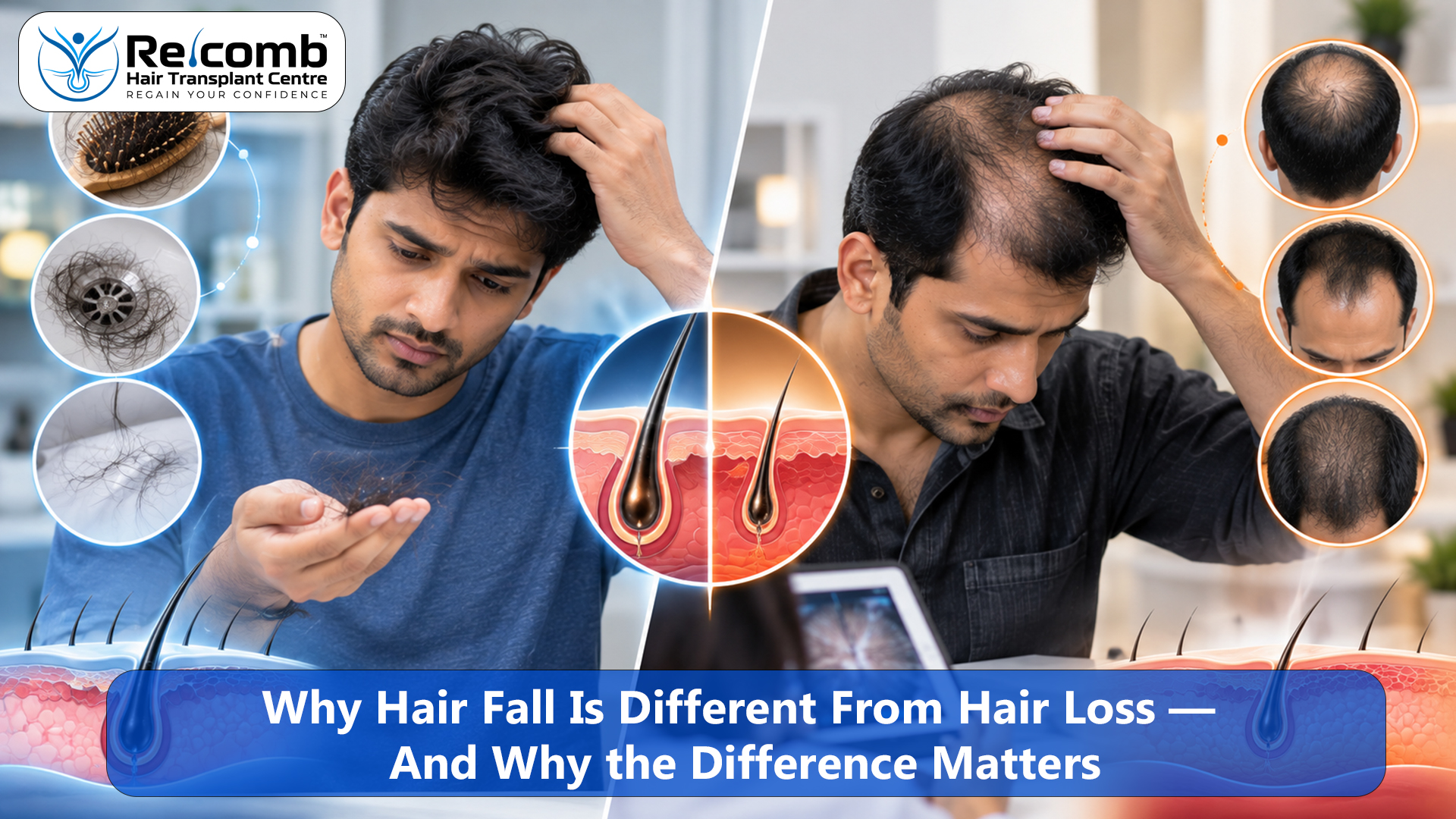

Every week, patients arrive at a hair clinic having already decided they need a transplant. They have been shedding heavily for three months, the density looks visibly lower, and they are convinced the loss is permanent. Some of them are right. A meaningful number are not.
The distinction between temporary hair loss and permanent baldness is one of the most clinically important questions in hair restoration. It determines whether a patient needs a transplant, a medical treatment, a nutritional correction, or simply time. Getting this wrong in either direction carries real consequences. Treating temporary loss with surgery wastes donor grafts that cannot be recovered. Dismissing permanent loss as temporary delays treatment during the window when medical management is most effective.
If you are currently experiencing hair loss and are unsure whether what you are seeing is permanent, a proper clinical assessment is the only reliable way to find out.
Book a Hair Loss Assessment at RECOMB, Surat → WhatsApp: +91 7624008000 | www.recombhair.com
What Temporary Hair Loss Actually Means
Temporary hair loss, clinically referred to as telogen effluvium in its most common form, occurs when a significant number of hair follicles are pushed prematurely into the resting phase of the hair cycle. The follicles themselves are not damaged or destroyed. They are dormant. When the triggering cause is removed and the follicle environment normalises, those follicles return to the growth phase and hair regrows.
The key clinical distinction is this: in temporary hair loss, the follicle is intact. In permanent baldness, the follicle has miniaturised or been destroyed, and cannot produce normal hair again without surgical intervention.
Temporary hair loss is almost always diffuse, meaning it affects the entire scalp relatively evenly rather than following a defined pattern. It tends to present as an overall reduction in density rather than a receding hairline or a thinning crown. Patients often notice more hair in the shower, on the pillow, and when running their fingers through their hair, but the scalp itself does not look visibly bald.
Common Causes of Temporary Hair Loss
Understanding what triggers temporary shedding helps patients identify whether a recent event in their life may explain what they are currently experiencing.
High fever or viral illness is one of the most common triggers. The physiological stress of a significant illness pushes a large number of follicles into the resting phase simultaneously. Shedding typically begins six to twelve weeks after the illness, which means patients often do not connect the two events. Post-COVID hair loss became widely recognised for this reason.
Sudden or significant weight loss triggers the same response. Crash diets, post-bariatric surgery weight loss, or any period of severe caloric restriction deprives follicles of the nutritional support they need and causes widespread shedding within weeks to months.
Nutritional deficiencies, particularly low ferritin, iron deficiency without full anaemia, low vitamin D, and inadequate protein intake, are among the most underdiagnosed causes of hair shedding in both men and women. These are correctable and hair recovers fully once levels are restored and maintained.
Emotional or psychological stress sustained over months causes hormonal disruption that affects the hair cycle. Chronic elevated cortisol pushes follicles out of the growth phase prematurely. The loss is real and often alarming, but the follicles are not permanently affected.
Hormonal changes in women, including post-pregnancy shedding, thyroid dysfunction, and changes related to stopping oral contraceptives, cause significant temporary shedding that resolves once hormones stabilise.
Certain medications including blood thinners, retinoids, some antidepressants, and beta blockers list hair loss as a known side effect. When the medication is changed or discontinued under medical guidance, shedding typically stops and density recovers.
What Permanent Baldness Actually Means
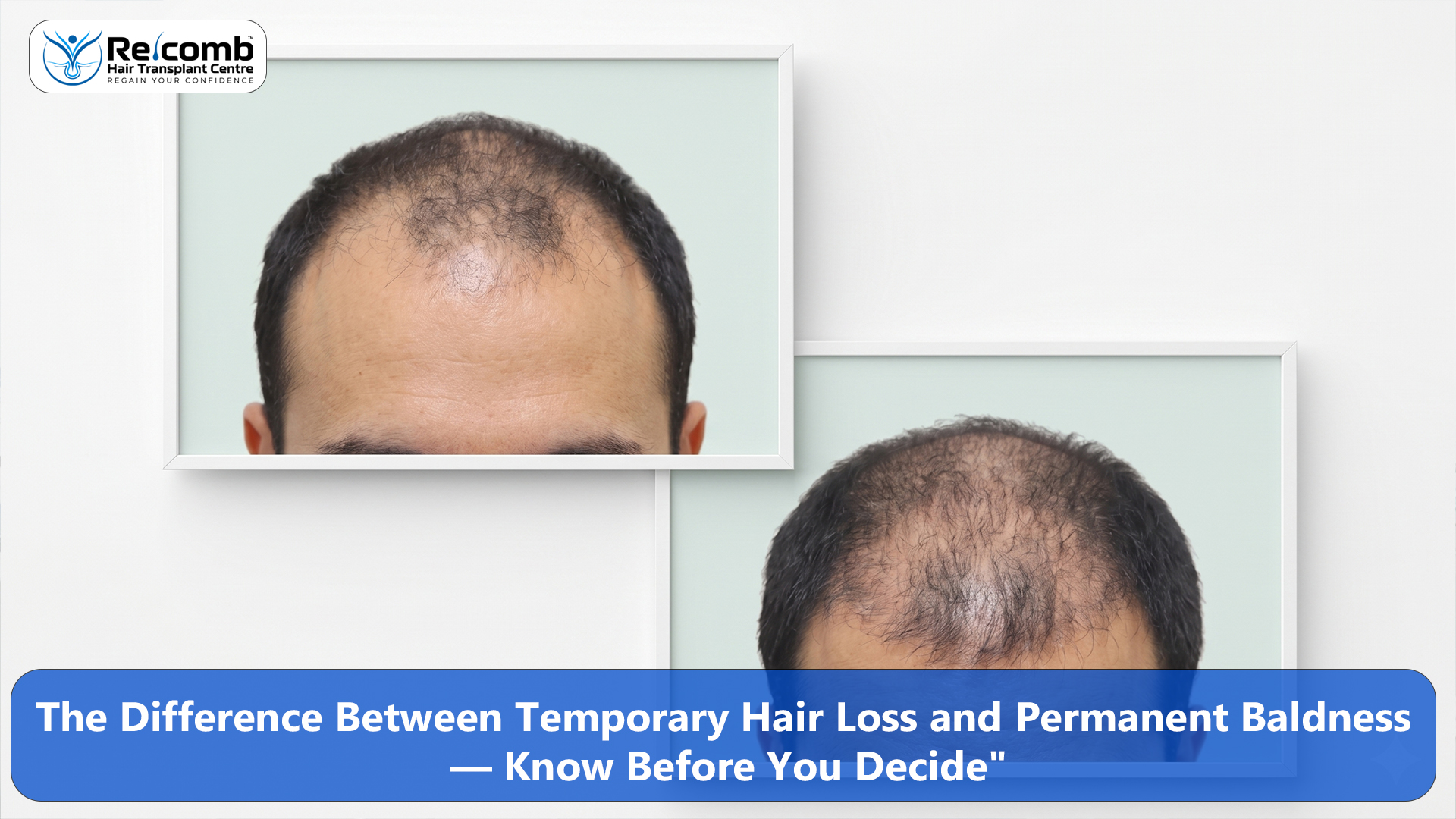
Permanent hair loss occurs when follicles have miniaturised to the point where they can no longer produce visible hair, or when they have been destroyed by scarring, chronic inflammation, or repeated trauma.
Androgenetic alopecia, the most common cause of permanent hair loss in both men and women, follows a predictable pattern. In men, this is the classic recession at the temples and thinning at the crown that follows the Norwood scale. In women, it typically presents as diffuse thinning at the central parting that widens over time, following the Ludwig scale.
The defining characteristic of androgenetic alopecia is follicle miniaturisation. DHT binds to genetically susceptible follicles and causes each successive hair cycle to produce a progressively thinner, shorter hair until the follicle produces nothing visible at all. This process is gradual, which is why many patients do not notice it until significant miniaturisation has already occurred.
Scarring alopecias are a group of conditions including lichen planopilaris and frontal fibrosing alopecia where inflammation destroys the follicle permanently. These conditions require early diagnosis and specific treatment to halt progression. They cannot be addressed with standard hair transplant surgery until the condition is fully inactive.
Traction alopecia, caused by years of tight hairstyles that place continuous tension on the hairline follicles, can cause permanent loss at the temples and hairline if the damage is longstanding enough.
How to Tell the Difference Clinically
This is where self-diagnosis becomes unreliable and clinical assessment becomes essential. Several tools exist to distinguish between the two.
Trichoscopy is a magnified examination of the scalp and individual follicle openings. In androgenetic alopecia it shows a characteristic variation in hair shaft diameter, with miniaturised hairs visible alongside normal-diameter hairs. In telogen effluvium, shaft diameter is relatively uniform. This single examination often provides a clear answer within minutes.
The pull test assesses whether the shedding is in an active phase. More than three hairs extracted from a gentle pull of approximately fifty hairs suggests active shedding. This is a clinical sign of ongoing effluvium rather than pattern loss.
Blood investigations including serum ferritin, thyroid function, complete blood count, and vitamin D levels rule out the correctable nutritional and medical contributors that can mimic or exacerbate pattern loss.
Scalp photographs taken at regular intervals, typically every three to six months, show whether loss is progressing in a defined pattern or diffusely, and whether density is recovering or continuing to decline.
Pattern and distribution of loss is itself informative. Loss concentrated at the temples and crown following a predictable map points toward androgenetic alopecia. Loss distributed evenly across the scalp, including areas that are typically resistant in pattern loss, points toward a systemic or nutritional cause.
Why This Distinction Matters Before Any Treatment Decision
The consequences of misidentifying the type of hair loss are significant in both directions.
A patient with telogen effluvium who undergoes a hair transplant has used a portion of their finite donor grafts to address a problem that would have resolved on its own within six to twelve months. Those grafts cannot be returned. If that patient goes on to develop androgenetic alopecia later, they have fewer grafts available for when surgery is genuinely needed.
A patient with early androgenetic alopecia who waits, assuming the loss is temporary, misses the window when medical management is most effective. Finasteride and minoxidil work best on follicles that are miniaturising but still active. Once a follicle has stopped producing hair entirely, no medical treatment can recover it. Every month of delay in confirmed androgenetic alopecia is a month of continued follicle miniaturisation that could have been slowed.
Getting the diagnosis right is not a preliminary step. It is the most important step.
At RECOMB, we see patients who have been told by other clinics they need a transplant when what they actually need is a ferritin supplement and three months of patience. We also see patients who have been telling themselves the loss is stress-related for two years while androgenetic alopecia has been quietly advancing. Both situations are avoidable with a proper assessment.
Get a Diagnosis Before a Decision at RECOMB, Surat → WhatsApp: +91 7624008000 | www.recombhair.com
What Happens When Both Are Present
This is more common than most patients realise. A man with underlying androgenetic alopecia experiences a significant stressor, an illness, a period of extreme work pressure, a nutritional deficit, and develops telogen effluvium on top of his existing pattern loss. The combined shedding is dramatic and alarming.
In this situation, the temporary component will resolve as the trigger is addressed. But the underlying pattern loss will continue. Treatment must address both, the immediate trigger through nutritional correction or stress management, and the androgenetic component through medical management.
Treating only the temporary component leaves the permanent loss unaddressed. Treating only the permanent component without identifying and removing the trigger means the patient continues to shed heavily while the medical treatment takes effect. Both must be identified and both must be treated.
RECOMB's Approach (2026)
At RECOMB Hair Transplant Centre, Surat, no treatment recommendation is made before the type and cause of hair loss is clearly established.
Every new patient undergoes a clinical assessment that includes trichoscopy, scalp examination, detailed history, and where indicated, targeted blood investigations. The goal is to answer the fundamental question first: is this temporary or permanent, and if both are present, in what proportion?
From that answer, a treatment sequence is built. For patients with purely temporary loss, we explain the cause, address the trigger, and monitor recovery. Surgery is not discussed because it is not relevant. For patients with confirmed androgenetic alopecia, we establish the stage, project the trajectory, and build a medical and surgical plan that accounts for the next two decades, not just the next 12 months.
We do not recommend surgery to patients who do not need it. We do not delay medical treatment for patients who need it urgently. The diagnosis drives everything.
Final Takeaway
Not all hair loss is the same and not all hair loss requires the same response. Temporary shedding, properly identified and properly managed, resolves without surgery and without permanent consequences. Permanent pattern loss, caught early and treated correctly, can be slowed significantly and addressed surgically when the time is right.
The mistake that costs patients the most, in money, in donor grafts, and in lost time, is making a treatment decision before the diagnosis is clear.
Before you decide on a transplant, before you start a medication, before you assume the loss will reverse on its own, get a proper assessment. The answer will change what you do next.
Dr. Bhalala conducts a limited number of personal consultations each week at RECOMB, Surat. If you are unsure whether what you are experiencing is temporary or permanent, this is the conversation that gives you a clear answer.
Know What You Are Dealing With Before You Decide → WhatsApp: +91 7624008000 We respond within 24 hours, 6 days a week. www.recombhair.com
Contact RECOMB Hair Transplant Centre
Phone: +91 7624008000
Website: www.recombhair.com