
The question comes up regularly in consultations. A patient who colours their hair, sometimes monthly, sometimes more frequently, notices increased shedding or visible thinning and connects it to the colouring. They want to know whether the dye is causing their hair loss and whether the damage is permanent.
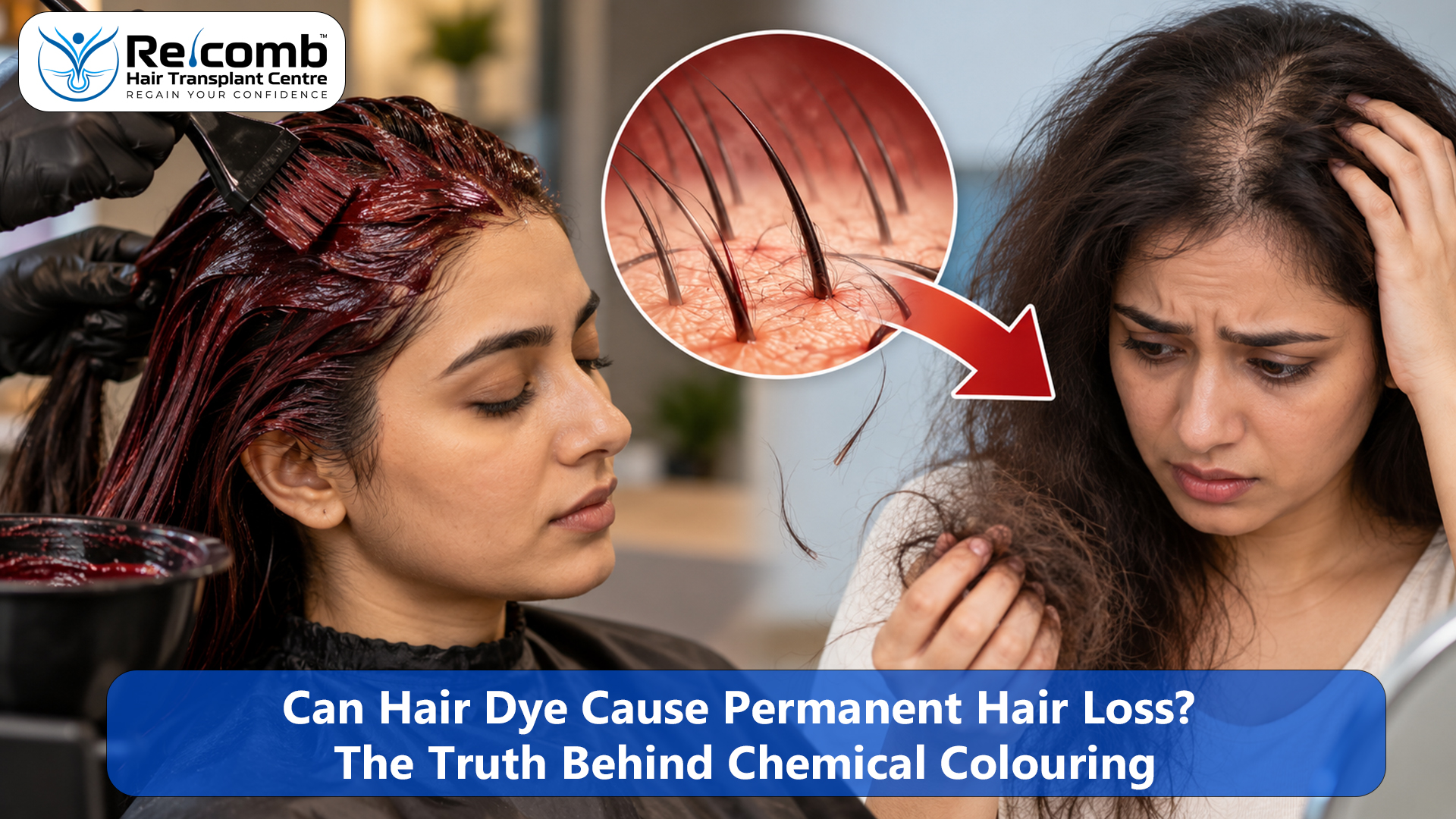
The clinical answer is more specific than either a simple yes or a simple no. Hair dye does not cause androgenetic alopecia. It does not destroy follicles in the way that DHT-driven miniaturisation does. But chemical colouring does cause specific types of damage to the hair shaft and scalp that compound existing hair loss conditions, worsen scalp health, and in cases of severe allergic reaction can cause localised and in rare cases permanent follicle damage.
Understanding exactly what chemical colouring does, and does not do, gives patients the clinical framework to make informed decisions about their hair colour routine without either abandoning it unnecessarily or continuing it in ways that are clearly worsening their scalp health.
What Chemical Hair Dye Contains
Permanent hair dye is the most chemically intense category and the most relevant to hair and scalp health concerns. Unlike semi-permanent or temporary dyes that coat the outside of the hair shaft, permanent dye works by opening the hair cuticle, depositing pigment molecules inside the hair cortex, and then closing the cuticle around them.
This process requires two active chemical systems working together. The first is an alkaline agent, typically ammonia, which raises the pH of the scalp and hair shaft environment to swell and open the cuticle scales. The second is an oxidising agent, typically hydrogen peroxide at concentrations between three and twelve percent, which bleaches the existing natural pigment and activates the new colour molecules to bond within the cortex.
Both of these chemical actions, the alkaline opening of the cuticle and the oxidative bleaching of the cortex, produce changes to the hair shaft and scalp that accumulate with repeated exposure.
Para-phenylenediamine, commonly referred to as PPD, is the primary colouring molecule in most permanent dark dyes. It is also the ingredient most commonly responsible for allergic contact dermatitis of the scalp and one of the most clinically significant ingredients from a hair loss perspective.
What Hair Dye Does to the Hair Shaft
Permanent colouring chemically alters the hair shaft at a structural level. Ammonia and hydrogen peroxide together break disulphide bonds within the hair cortex, the bonds that give the shaft its structural integrity and strength. The colour chemistry then deposits pigment within the cortex while these bonds are disrupted.
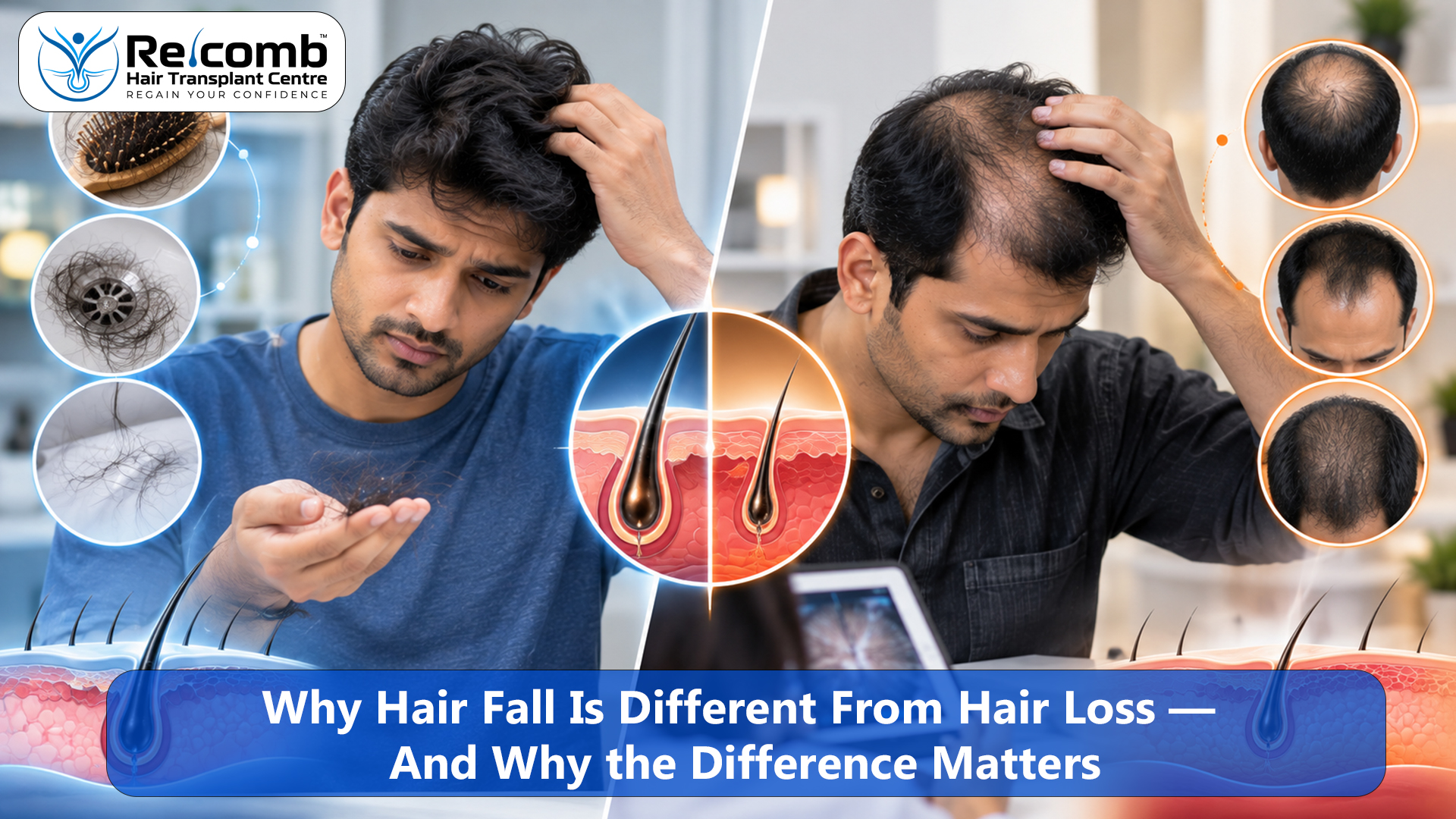
Although the bonds partially reform after the dyeing process, the restoration is not complete. Repeatedly coloured hair has progressively weakened cuticle structure, reduced elasticity, increased porosity, and lower resistance to mechanical breakage compared to uncoloured hair. This is why heavily processed hair breaks more easily during combing, brushing, and washing, contributing hair to the brush and shower drain that represents breakage rather than natural follicular shedding.
The hair fall patients notice after colouring is frequently breakage rather than shedding from the root. This distinction matters clinically. Breakage does not affect the follicle. It does not deplete the hair from the root and leave the follicle unable to produce a replacement. The follicle is intact, producing new hair that will eventually break again if the chemical exposure continues without protective measures.
In patients with fine hair, low hair shaft diameter, or concurrent nutritional deficiencies that have already reduced shaft structural integrity, the chemical damage from colouring is more severe and the breakage more pronounced. The same colouring process that a patient with thick, resilient hair tolerates without visible consequence can produce significant shaft fragility and breakage in a patient with already compromised hair structure.
What Hair Dye Does to the Scalp
The scalp effects of repeated chemical colouring are clinically more significant than the shaft effects when it comes to hair loss, because they involve the follicular environment directly.
The alkaline chemistry of permanent dye raises scalp pH during the colouring process. The natural scalp pH is between 4.5 and 5.5, mildly acidic. The alkaline pH shift during and after colouring disrupts the scalp's acid mantle, the protective barrier maintained by the skin's natural secretions. This disruption increases scalp sensitivity, impairs the barrier function that keeps moisture in and irritants out, and alters the scalp microbiome by making the environment less favourable for beneficial organisms and more favourable for pathogenic ones including Malassezia.
Hydrogen peroxide, even at the concentrations used in hair dye, is a strong oxidant that produces free radicals on the scalp surface and within the perifollicular tissue. Oxidative stress at the follicle level damages the follicular microenvironment and contributes to the perifollicular inflammation that is associated with accelerated hair loss in patients with androgenetic alopecia.
Repeated alkaline exposure and oxidative stress from monthly colouring accumulates over months and years into chronic scalp barrier dysfunction and sustained low-grade perifollicular inflammation. This does not cause androgenetic alopecia but it accelerates its visible progression in susceptible patients and reduces the effectiveness of medical treatments including topical minoxidil, which depends on appropriate scalp pH and barrier integrity for optimal absorption.
PPD Allergy and Localised Follicle Damage
Para-phenylenediamine is the most clinically important ingredient in permanent hair dye from an allergic and follicle damage perspective.
PPD allergy is more common than most patients realise. Sensitisation develops with repeated exposure, meaning a patient may colour their hair for years without reaction before developing an allergic response. Once sensitised, subsequent exposures trigger increasingly severe contact dermatitis reactions that can range from mild scalp itching and redness to severe blistering, oedema, and significant scalp inflammation.
Severe allergic contact dermatitis from PPD causes intense perifollicular inflammation that, in cases where the reaction is extensive and treatment is delayed, can damage follicles enough to produce localised temporary or in rare cases of very severe reaction, permanent hair loss in the affected areas. The hair loss in these cases is caused not by the dye chemistry directly but by the immune-mediated inflammatory response to the allergen.
Patients who develop any signs of scalp reaction to hair dye, itching beyond mild during application, scalp redness or swelling after colouring, or facial swelling which can indicate systemic allergic response, should have a patch test performed before any future colouring and should consider PPD-free alternatives.
Does Hair Dye Cause Permanent Hair Loss?
The specific clinical answer to this question depends on what is meant by permanent hair loss.
Hair dye does not cause androgenetic alopecia. It does not interact with DHT, does not miniaturise genetically susceptible follicles, and does not produce the progressive pattern of hair loss that characterises male and female pattern baldness. A patient who has never had androgenetic alopecia and uses hair dye regularly will not develop it as a consequence of colouring.
Hair dye does not typically cause permanent hair loss through its direct chemical action on normal follicles. The shaft damage and breakage it produces is reversible in the sense that stopping colouring and supporting hair structural integrity allows new growth to emerge without the same damage profile.
However, in two specific scenarios, permanent or prolonged hair loss from colouring is possible. The first is severe PPD-mediated allergic contact dermatitis with significant localised inflammation that damages follicles, producing alopecia in the affected area that may be permanent if the follicle is sufficiently damaged. This is uncommon but real, particularly in patients who continue colouring after early signs of sensitisation appear.
The second is the compounding effect on androgenetic alopecia. A patient with genetic predisposition to pattern hair loss who regularly colours their hair in ways that sustain scalp inflammation, barrier dysfunction, and oxidative stress will see their androgenetic alopecia progress more rapidly than they would without these additional stressors. The colouring does not cause the hair loss but it accelerates it. In this context, the hair loss it contributes to is permanent, not because the dye damaged the follicles directly but because it accelerated the DHT-driven miniaturisation that was already in progress.
Practical Guidance for Patients Who Colour Their Hair
For patients who experience hair fall or scalp concerns alongside hair colouring, several practical steps reduce the chemical burden without requiring a complete cessation of colouring.
Extending the interval between full colouring applications reduces cumulative scalp chemical exposure. Root touch-ups rather than full-length applications every session limits the area of scalp repeatedly exposed to oxidative chemistry.
Lower peroxide concentrations, three percent rather than nine or twelve percent, produce less oxidative stress at the scalp surface while still achieving colour deposition. This is a choice that can be made in consultation with a colourist.
PPD-free alternatives, including formulations using alternative colouring molecules, are available and represent a clinically relevant option for patients who have experienced scalp reactions or who have confirmed PPD sensitivity through patch testing.
A scalp treatment applied before colouring that creates a temporary protective film over the scalp surface reduces direct chemical contact with the scalp skin and perifollicular tissue during the colouring process.
Following colouring with a pH-balanced conditioner or scalp treatment restores the acid mantle that the alkaline dye chemistry disrupted, returning the scalp environment toward its normal protective state more rapidly.
For patients at RECOMB undergoing or planning hair transplant surgery, colouring the hair in the transplanted zone is not advised during the post-operative healing period and should be discussed specifically with the surgical team before being resumed.
Book a Scalp Assessment If Hair Dye Is Worsening Your Hair Fall at RECOMB →
WhatsApp: +91 7624008000 | www.recombhair.com
RECOMB's Approach (2026)
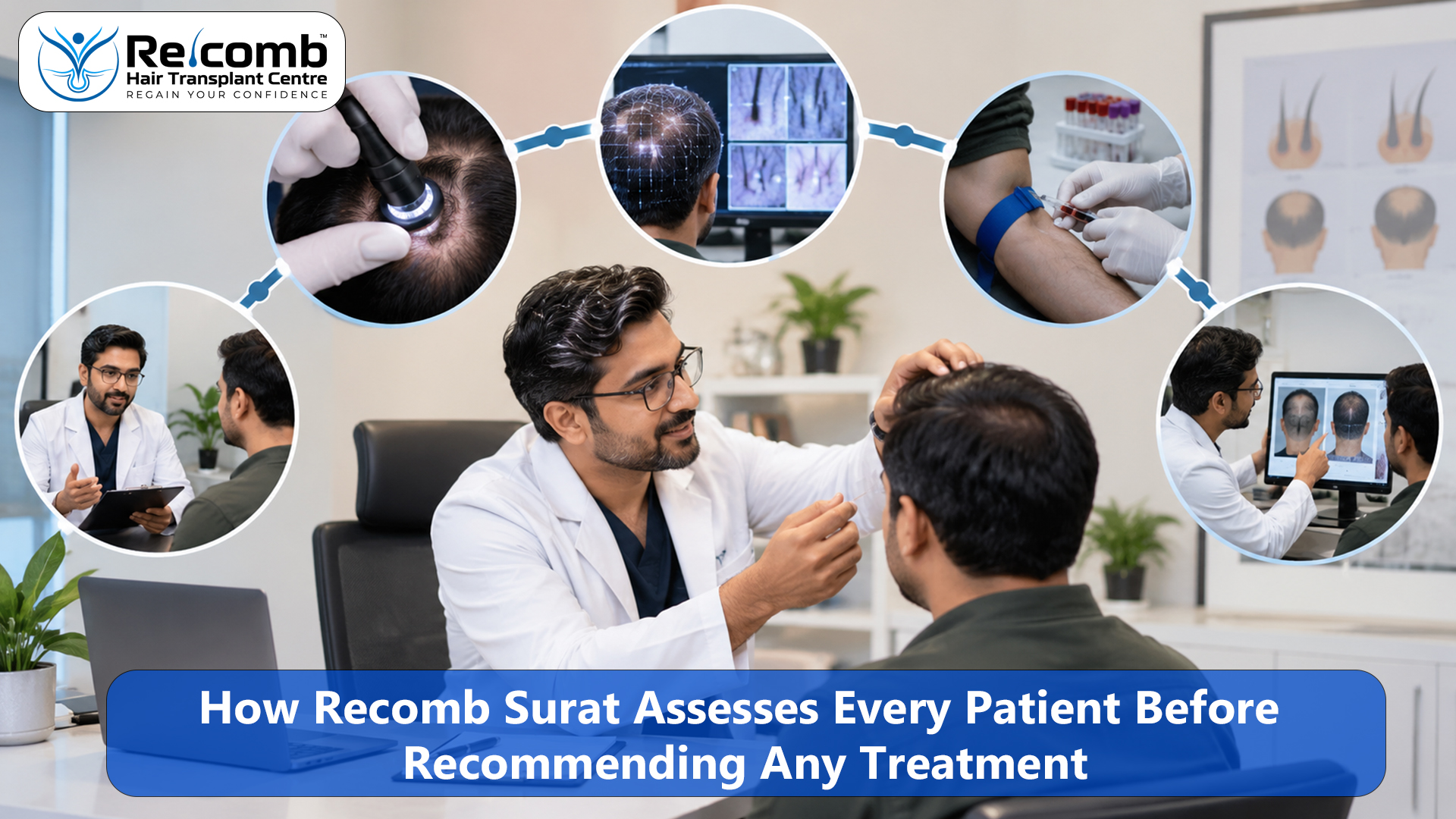
At RECOMB Hair Transplant Centre, Surat, patients who colour their hair are assessed for the specific scalp consequences of their colouring routine as part of the initial scalp analysis. Trichoscopy identifies barrier disruption, follicular inflammation, and scalp pH-related changes that may be compounding an underlying hair loss condition.
Dr. Krishna Bhalala's background as a DNB Dermatologist means that the dermatological consequences of cosmetic chemical exposure are evaluated and managed alongside the hair restoration plan rather than being treated as unrelated concerns. For patients with androgenetic alopecia who also colour their hair, the management plan addresses both the genetic and environmental components of their hair loss picture.
Final Takeaway
Hair dye does not cause androgenetic alopecia or permanently destroy healthy follicles through its normal chemical action. What it does is damage the hair shaft through repeated structural compromise, disrupt scalp barrier function and pH, produce oxidative stress at the follicle level, and in susceptible individuals trigger PPD-mediated allergic reactions that can in severe cases cause localised follicle damage.
For patients with existing hair loss, particularly androgenetic alopecia, chemical colouring compounds the follicular stress already present and accelerates visible progression in ways that are preventable with adjusted colouring practices and appropriate scalp management.
Dr. Krishna Bhalala and Dr. Nilesh Kachhadiya conduct a limited number of personal consultations each week at RECOMB, Surat. If you colour your hair and have ongoing scalp concerns or hair fall, a clinical assessment that accounts for your colouring history alongside your hair loss picture is where an accurate management plan starts.
Get a Scalp Assessment That Accounts for Your Full Hair History →
WhatsApp: +91 7624008000
We respond within 24 hours, 6 days a week.
www.recombhair.com
Contact RECOMB Hair Transplant Centre
RECOMB Hair Transplant Centre
19, Ground Floor, Zenon Building, Opp. Unique Hospital, near Kiran Motors, Khatodara Wadi, Surat, Gujarat 395001
Phone: +91 7624008000
Website: www.recombhair.com