
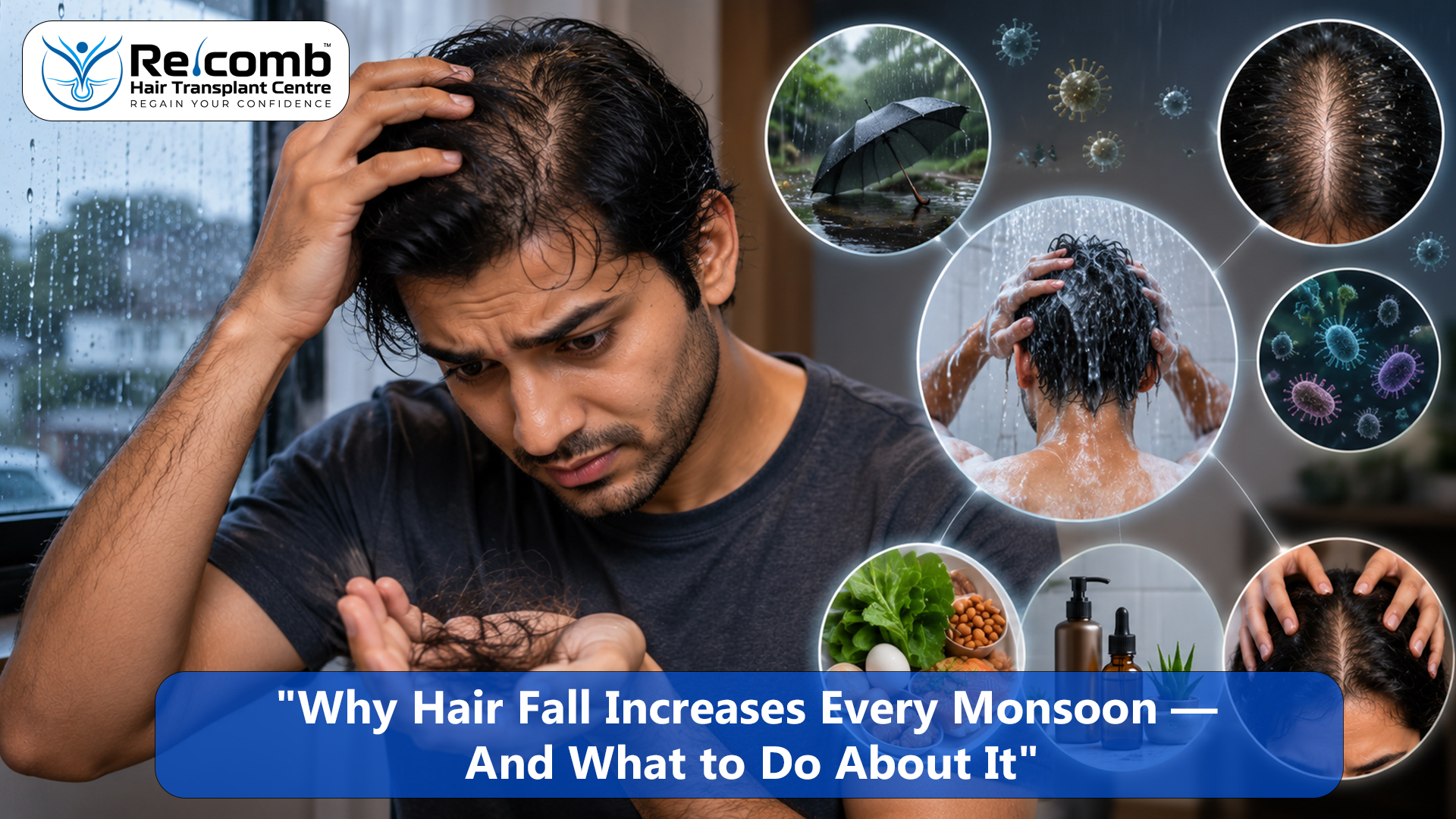
Every year, as the monsoon arrives in Surat and across Gujarat, dermatology and hair clinics see a predictable increase in patients presenting with increased hair shedding. The complaint is consistent: hair fall that was manageable through summer has suddenly worsened, more on the pillow, more in the shower drain, more when combing.
Most patients assume the monsoon itself is causing the problem and will resolve when the rains end. Some of that assumption is correct. But the clinical picture is more specific than seasonal weather, and understanding the actual mechanisms involved determines whether the right response is patience, treatment, or a more thorough investigation.
This blog explains what actually drives increased hair fall during the monsoon in India, which causes are genuinely seasonal and self-limiting, which are signals of something requiring treatment, and what patients in Surat and Gujarat can do about it right now.
If your hair fall has increased significantly this monsoon and has not improved by the end of the season, a clinical assessment at RECOMB gives you a specific answer rather than a generalised seasonal explanation.
Book a Monsoon Hair Fall Assessment at RECOMB, Surat →
WhatsApp: +91 7624008000 | www.recombhair.com
The Biology Behind Seasonal Hair Shedding
The hair follicle operates in a cycle that includes a growth phase, a transition phase, and a resting phase before the cycle restarts. The resting phase, called telogen, ends with the shedding of the existing hair shaft as the new growth cycle begins beneath it. In a healthy scalp, approximately 10 to 15 percent of follicles are in the telogen phase at any given time, producing the baseline daily shedding of 50 to 100 hairs that is considered normal.
Research into seasonal hair loss patterns in humans, while not as extensively studied as in other mammals, consistently shows a peak in telogen phase entry in late summer across multiple populations. In the Indian context this corresponds roughly to the period just before and during the monsoon months. A larger than usual proportion of follicles entering telogen simultaneously means a larger than usual number shedding within the same two to three month window, producing the seasonal increase in visible hair fall that patients notice.
This synchronised shedding is partly driven by the photoperiod shift, meaning the change in daylight hours as seasons transition, which influences melatonin and other hormonal signals that regulate the hair cycle. It is also influenced by the thermal and humidity shift that the monsoon brings, which affects scalp physiology directly.
This seasonal component is real, largely self-limiting, and not a signal of pathology on its own in patients who have otherwise healthy hair. The shedding resolves as follicles re-enter the growth phase over the following weeks to months.
Why the Monsoon Creates Specific Scalp Problems Beyond Seasonal Shedding
The seasonal shedding component explains some but not all of the increased hair fall patients experience during the monsoon. Several additional mechanisms specific to the monsoon environment contribute independently.
Elevated Humidity and Fungal Overgrowth
Surat's monsoon brings sustained high humidity, creating conditions in which Malassezia, the scalp fungus responsible for seborrheic dermatitis, proliferates more actively than in drier months. Malassezia overgrowth produces follicular inflammation that shortens the anagen phase and contributes directly to hair shedding on top of the seasonal component.
Patients who are already prone to oily scalp or seborrheic dermatitis find their scalp condition worsens significantly during the monsoon months. The combination of excess sebum production in warm, humid conditions and Malassezia proliferation creates an inflammatory burden at the follicle that compounds the seasonal shedding and extends its duration.
Hard Water and Scalp Exposure in Surat
Surat's water hardness creates an additional monsoon-specific problem. Patients who are frequently caught in rain or who wash their hair more frequently during the monsoon expose their scalp to more hard water contact than usual. The mineral deposits from hard water accumulate on the scalp surface and within follicle openings, increasing the barrier dysfunction and follicular plugging described in the oily and dry scalp blog.
The combination of hard water mineral deposits and elevated Malassezia activity during the monsoon creates a particularly hostile follicular environment that produces more shedding than either factor alone.
Nutritional Disruption
Monsoon in Gujarat often coincides with dietary changes that affect hair follicle nutrition. Reduced intake of fresh vegetables and fruits during the monsoon, increased consumption of fried and processed foods, and in some patients reduced protein intake during fasting periods associated with religious observances in this season, create temporary nutritional deficits that affect the hair cycle. Ferritin levels, already low in many patients year-round, can fall further during periods of reduced dietary iron.
These nutritional shifts do not cause immediate shedding because the hair cycle has a delay of approximately two to three months between a physiological trigger and the resulting visible shedding. This means nutritional changes in the pre-monsoon months can manifest as increased shedding during or just after the monsoon, confusing the timeline for patients trying to identify the cause.
Increased Scalp Sweat and Product Buildup
The combination of heat, humidity, and rainfall during the monsoon increases scalp sweating and the frequency with which patients use styling products or dry shampoos to manage wet hair. Sweat mixed with product residue creates a scalp environment with increased pH, disrupted microbiome balance, and accelerated sebum oxidation, all of which contribute to follicular irritation and increased shedding.
How to Tell Whether Monsoon Hair Fall Is Normal or Requires Investigation
This is the clinical question that matters most for patients currently experiencing increased shedding.
Monsoon hair fall that is within the self-limiting seasonal category typically has several characteristics. It presents as diffuse increased shedding across the entire scalp rather than concentrated recession at the temples or crown. It is noticeable but not alarming in volume, an increase from the patient's usual baseline rather than a dramatic acceleration. It begins during or shortly after the peak monsoon period and shows some improvement as the season ends. It does not produce visible thinning of the scalp surface, meaning the density looks the same even though more hairs are in the shower drain.
Hair fall that warrants clinical investigation has different characteristics. Visible thinning of the scalp surface, not just increased shedding, suggests that the follicles losing hair are not being replaced at the same rate, indicating either progressive androgenetic alopecia or a medical cause that has moved beyond surface shedding into actual density loss. Hair fall that continues at the elevated rate beyond three to four months after the monsoon ends has moved past the seasonal window and suggests a persisting cause. Hair fall accompanied by scalp symptoms including persistent itching, visible scaling, redness, or tenderness suggests an active scalp condition requiring treatment. And hair fall in a patient with known risk factors for nutritional deficiency, thyroid dysfunction, or rapid androgenetic alopecia progression always warrants investigation rather than seasonal attribution.
What Actually Helps: Practical Steps During Monsoon
The following interventions address the specific mechanisms driving monsoon hair fall and have clinical rationale beyond general advice.
Scalp Cleansing Frequency and Product Choice
During the monsoon, washing the scalp more frequently than usual is often beneficial rather than harmful, provided the right products are used. A gentle, sulphate-free shampoo used every two to three days prevents sebum and Malassezia accumulation without stripping the scalp barrier. For patients prone to seborrheic dermatitis, a ketoconazole or zinc pyrithione shampoo used twice weekly during the monsoon months specifically addresses Malassezia overgrowth.
The instinct to wash less frequently to avoid hair fall is counterproductive. Shedding visible during washing is hair that was already in the telogen phase and would have shed regardless. Allowing sebum and Malassezia to accumulate between washes increases the follicular inflammation that causes the next cycle of shedding.
Managing Wet Hair After Rain Exposure
Prolonged wet scalp exposure after rain increases scalp pH disruption and fungal activity. Drying the hair and scalp gently but thoroughly after rain exposure, without aggressive towel friction that dislodges shedding hairs from their follicles prematurely, reduces the duration of the suboptimal scalp environment that rain exposure creates.
Maintaining Nutritional Status Through the Season
Ensuring adequate protein intake, specifically 70 to 90 grams daily from plant or animal sources, and maintaining iron-containing food consumption through the monsoon dietary shift reduces the nutritional contribution to hair shedding. Patients with pre-existing low ferritin should ensure they are on appropriate supplementation throughout the season, not just during the months when shedding is most visible.
Scalp-Specific Treatment During the Monsoon
For patients already experiencing significant hair loss from androgenetic alopecia or other causes, the monsoon is a useful time to consider a course of GFC or PRP therapy. The biological growth factor support these treatments deliver reduces the inflammatory burden at the follicle during the period when both seasonal and environmental factors are most active, potentially shortening the duration and reducing the severity of monsoon-related shedding. This is not a standalone fix but a clinically rational addition to ongoing management during a high-demand season for follicle health.
Get a Treatment Plan Specific to Your Monsoon Hair Fall at RECOMB →
WhatsApp: +91 7624008000 | www.recombhair.com
When Monsoon Hair Fall Is Masking Something More Serious
This is the scenario that deserves the most clinical attention. The monsoon season produces a convenient seasonal explanation that both patients and clinicians can attribute hair fall to, which can obscure the beginning of a more significant and progressive hair loss condition.
A patient who notices increased shedding during their first monsoon after beginning to develop androgenetic alopecia may attribute the entire experience to the season. A patient with subclinical hypothyroidism that has been slowly developing may experience their first noticeable hair fall during the monsoon and attribute it entirely to the weather. A patient with critically low ferritin who has been borderline throughout the year may tip into symptomatic hair loss during the nutritional stress of the monsoon months.
In each of these situations, a purely seasonal attribution delays the diagnosis and treatment of a condition that will continue and worsen after the monsoon ends. The monsoon did not cause the condition. It made the condition visible. That distinction matters for what happens next.
RECOMB's Approach (2026)
At RECOMB Hair Transplant Centre, Surat, patients presenting with monsoon hair fall receive a clinical assessment rather than a seasonal reassurance. Dr. Krishna Bhalala's background as a DNB Dermatologist means that scalp conditions specific to the monsoon environment, seborrheic dermatitis, fungal overgrowth, and barrier disruption, are evaluated and treated as part of the assessment rather than being attributed generically to the season.
For patients where the monsoon hair fall is genuinely seasonal and self-limiting, this is confirmed through trichoscopy and the patient is given specific management guidance for the season. For patients where the assessment reveals an underlying condition being unmasked by the seasonal stress, the appropriate diagnosis and treatment plan is established before the next monsoon arrives to repeat the same experience.
Final Takeaway
Monsoon hair fall has real biological and environmental causes, and most of it in patients without underlying conditions is self-limiting within a few months of the season ending. But the monsoon is also the period when underlying conditions including androgenetic alopecia, nutritional deficiency, thyroid dysfunction, and seborrheic dermatitis become clinically visible for the first time or worsen enough to be noticeable.
The right approach is to manage the seasonal components actively, with appropriate scalp care, nutritional maintenance, and anti-fungal treatment where indicated, while remaining alert to patterns that suggest something more than seasonal shedding is at work.
Dr. Krishna Bhalala and Dr. Nilesh Kachhadiya conduct a limited number of personal consultations each week at RECOMB, Surat. If your monsoon hair fall has been more severe than usual, has continued beyond the season, or has produced visible thinning rather than just increased shedding, this is where a clinical answer starts.
Find Out Whether Your Monsoon Hair Fall Needs Treatment →
WhatsApp: +91 7624008000
We respond within 24 hours, 6 days a week.
www.recombhair.com
Contact RECOMB Hair Transplant Centre
RECOMB Hair Transplant Centre
19, Ground Floor, Zenon Building, Opp. Unique Hospital, near Kiran Motors, Khatodara Wadi, Surat, Gujarat 395001
Phone: +91 7624008000
Website: www.recombhair.com