Walk into most hair transplant clinics in India today and you will be presented with a package. Two thousand grafts at this price. Three thousand grafts at that price. A full head package for a fixed amount. The numbers are clean, the pricing is simple, and the decision appears straightforward.
It is not.
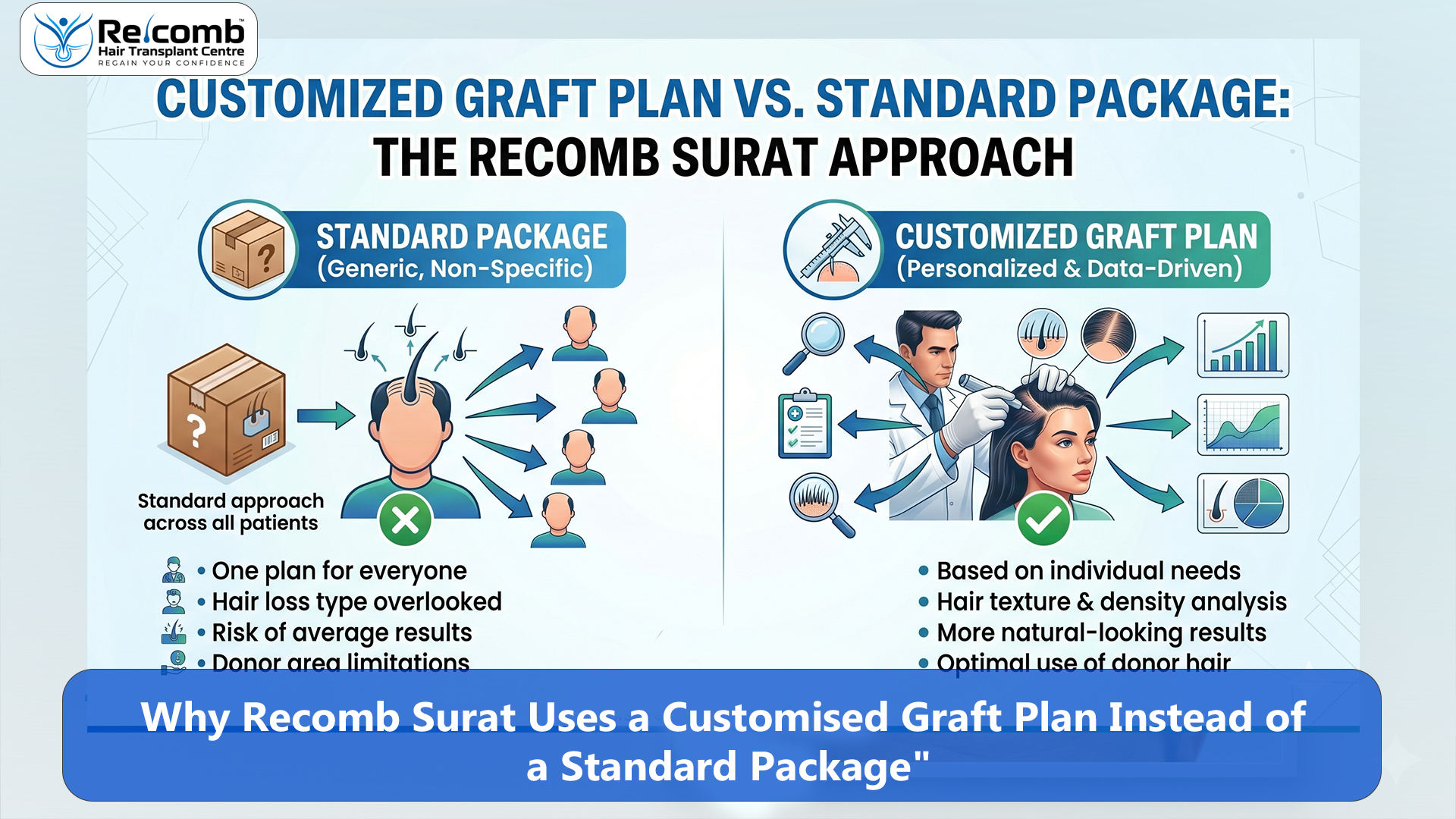
A standard package assumes that two patients with the same visible hair loss need the same number of grafts, placed in the same areas, using the same distribution. That assumption is clinically false. Two men both presenting with Norwood Grade 4 hair loss can have entirely different donor densities, different rates of progression, different hair shaft diameters, different scalp laxity, and different requirements for what a natural result demands in their specific case. Treating them with the same package does not serve either of them well.
This is why RECOMB does not offer standard packages. Every patient who undergoes a procedure at RECOMB receives a graft plan that is built specifically for them, based on their scalp, their hair loss pattern, their donor capacity, and their long-term trajectory.
If you want to understand what a personalised graft plan would look like for your specific case, a consultation at RECOMB is where that conversation begins.
Book a Personalised Graft Planning Consultation at RECOMB → WhatsApp: +91 7624008000 | www.recombhair.com
What a Standard Package Actually Means
A standard package is a commercial construct, not a clinical one. It exists because it is easy to market, easy to price, and easy to sell. It does not exist because it produces better results.
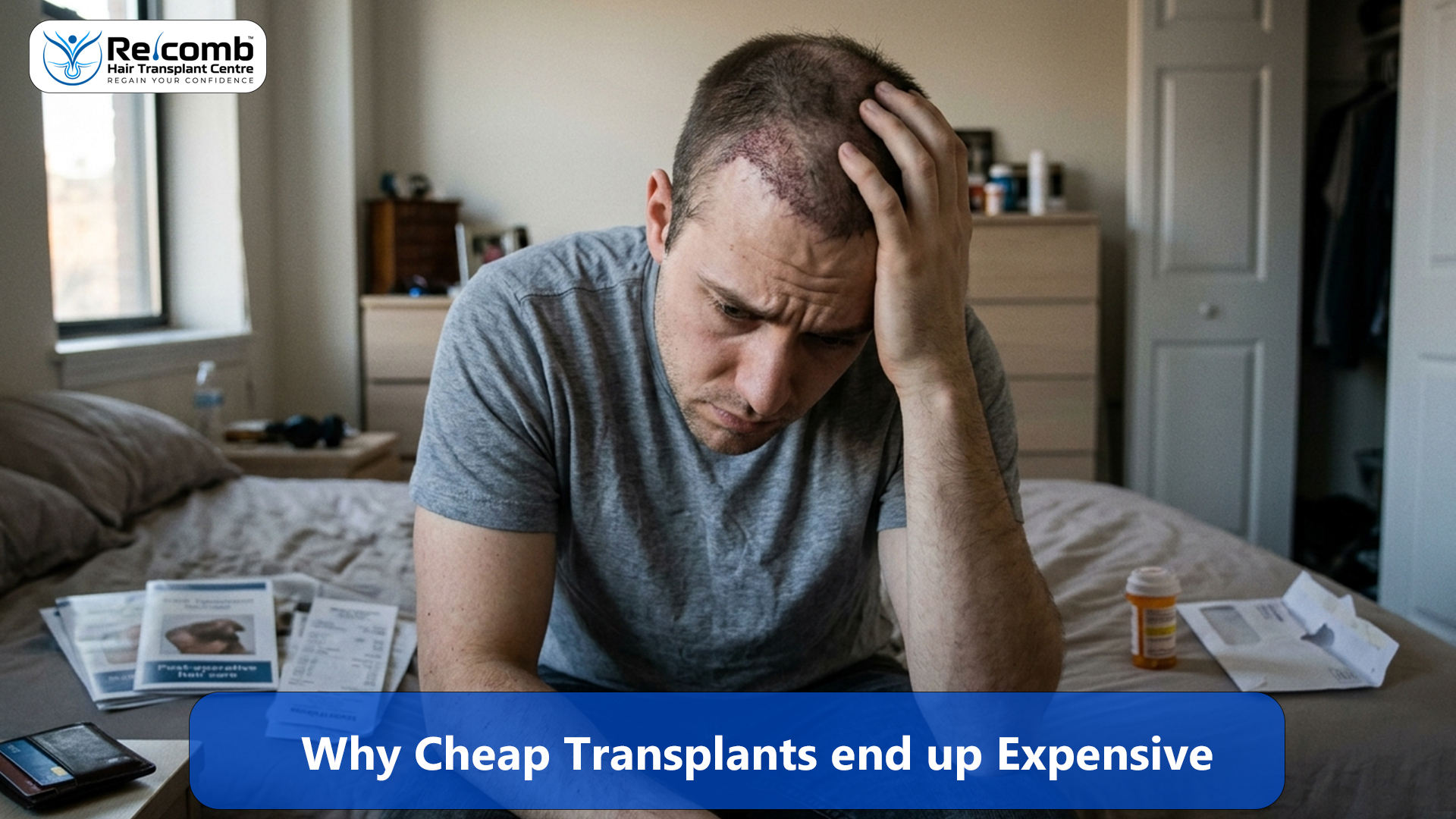
When a clinic offers a fixed graft package, the number is determined by what sells most commonly, not by what each individual patient needs. In practice this means some patients receive more grafts than their donor area should provide in a single session, which risks over-harvesting and visible thinning of the donor zone. Other patients receive fewer grafts than their coverage area requires, producing a density that looks thin even after full growth.
Standard packages also rarely account for graft type distribution. The frontal hairline requires predominantly single-hair grafts to create a natural, soft transition. The midscalp and crown require predominantly two and three hair grafts for density. A package that counts only total graft numbers without specifying how those grafts are distributed across zones and what follicular unit sizes are placed where will produce a result that is technically within the quoted number but clinically suboptimal.
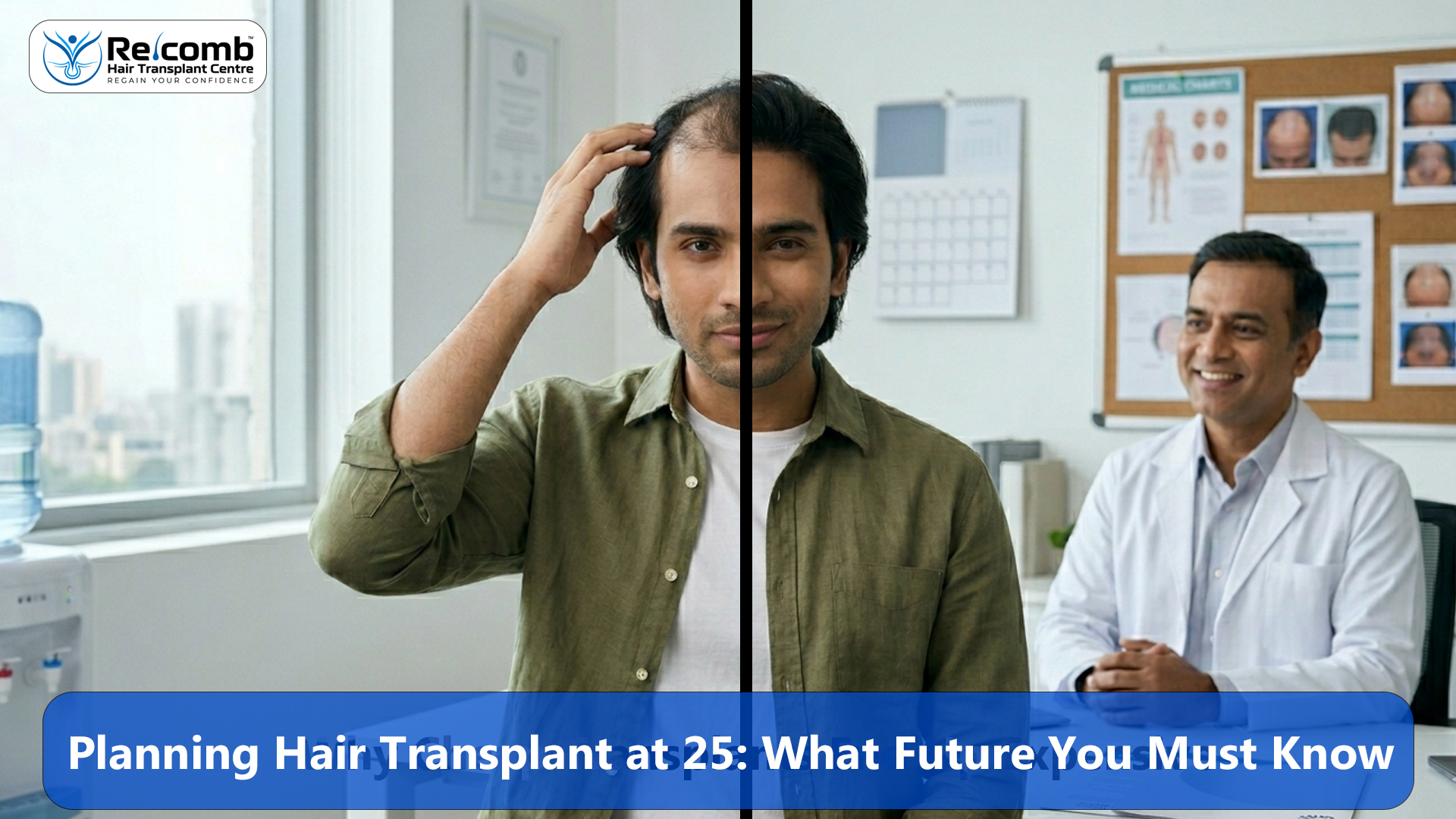
Perhaps most significantly, standard packages do not account for the future. A plan that looks complete today may look incomplete in five years as surrounding native hair continues to thin. Without factoring in the likely progression of hair loss and reserving donor grafts for future sessions, the package satisfies the immediate demand without serving the long-term interest.
What Goes Into a Customised Graft Plan at RECOMB
A personalised graft plan at RECOMB is built from a structured clinical assessment that takes place before any procedure is discussed in detail. The following are the components of that assessment.
Norwood or Ludwig Staging
The current degree of hair loss is mapped precisely using the Norwood scale for men and the Ludwig scale for women. This establishes not just where the loss is today but, combined with progression history and family pattern, where it is likely to go over the next 10 to 20 years. The graft plan addresses both the current picture and the projected future, because a result designed only for today will look wrong in a decade.
Donor Density Measurement
Donor density is measured using trichoscopy, not estimated visually. The number of follicular units per square centimetre in the safe donor zone, the average number of hairs per follicular unit, and the total extractable area together determine how many grafts are realistically available across a lifetime. This number is the foundation of the entire plan. No procedure should be designed without it.
Hair Characteristics
Hair shaft diameter, curl, colour contrast with the scalp, and texture all affect how many grafts are needed to achieve a visually satisfying density. A patient with thick, dark, straight hair achieves good visual density with fewer grafts per square centimetre than a patient with fine, light hair. Ignoring these characteristics and applying a uniform density target produces inconsistent results.
Zone Mapping and Graft Allocation
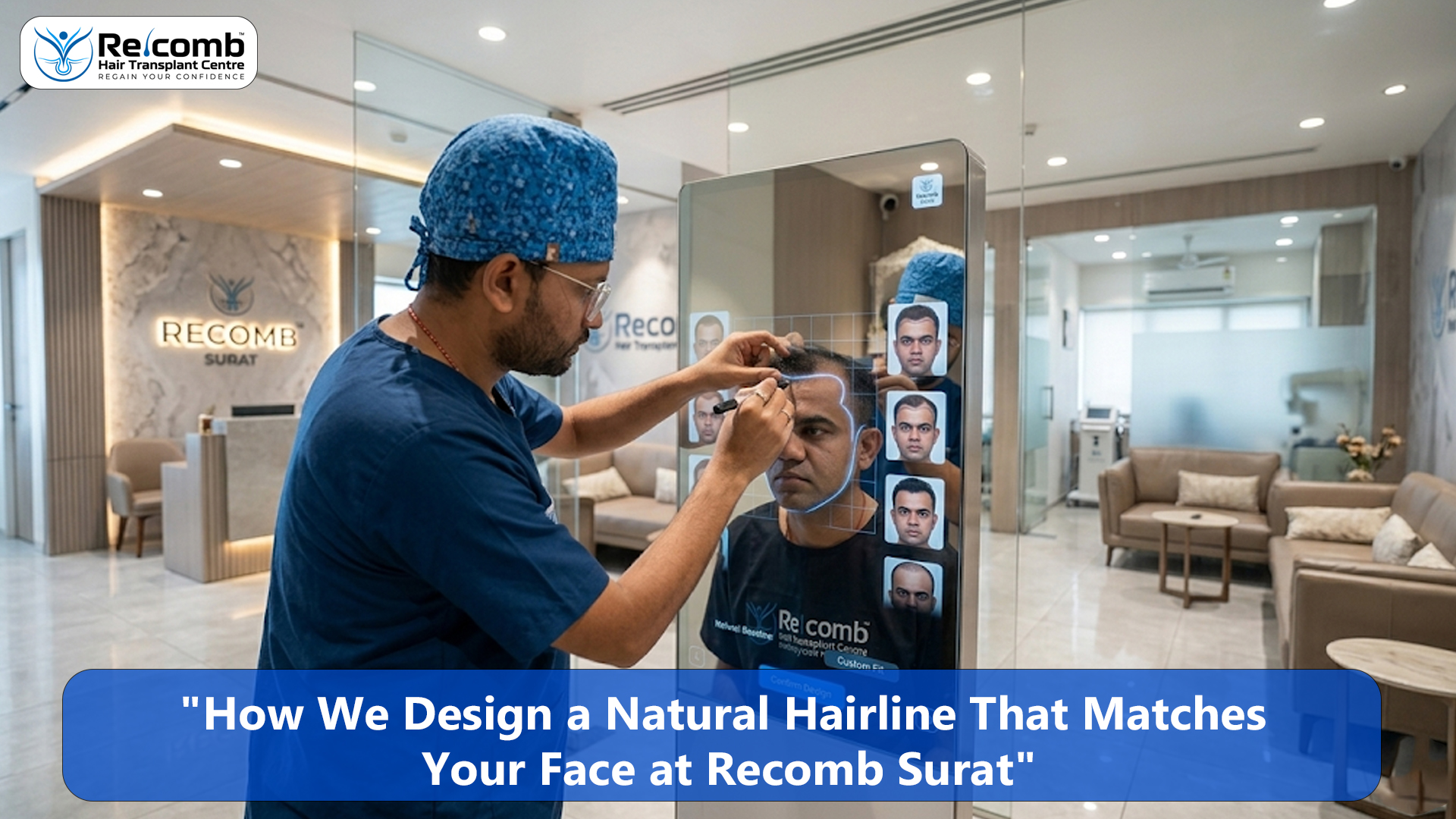
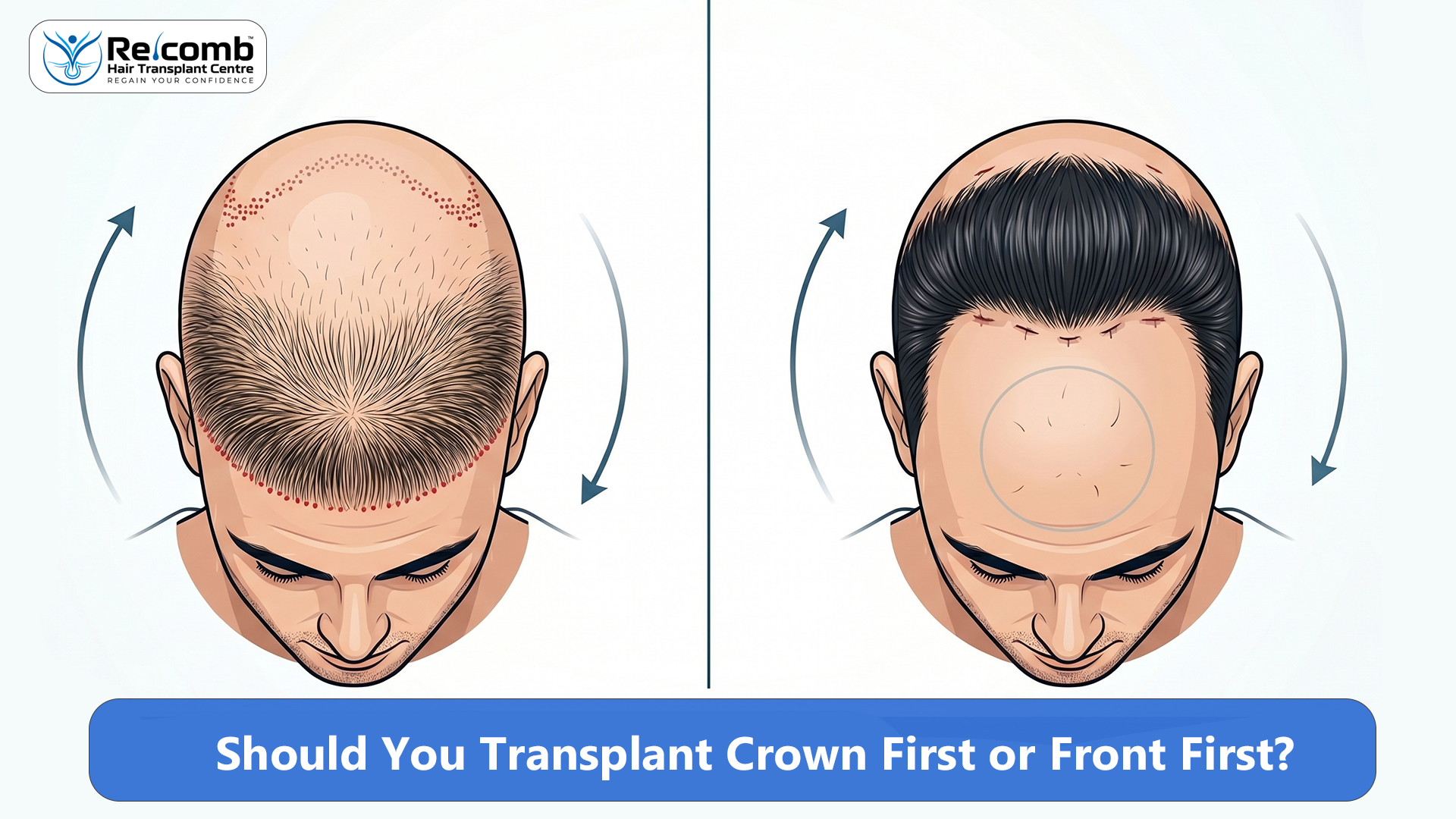
The scalp is divided into recipient zones, frontal hairline, frontal zone, midscalp, and crown, each with different density requirements and different graft type needs. The graft plan allocates specific numbers and types of grafts to each zone in a sequence that prioritises the areas of highest visual impact while preserving enough donor grafts for future zones and future sessions.
The frontal zone and hairline are prioritised in most cases because they frame the face and have the highest impact on overall appearance. Crown coverage, which requires a disproportionately high number of grafts relative to visual return, is planned with reserve grafts in mind rather than addressed aggressively in a first session.
Lifetime Graft Budget
Every patient at RECOMB is given a clear picture of their estimated lifetime donor capacity and how the proposed procedure uses that budget. If a patient has 5,000 estimated lifetime grafts and the first session uses 2,200, they leave knowing that approximately 2,500 to 2,800 grafts remain available for future sessions. This number informs every decision about how aggressively to approach coverage in the current session.
This is the piece that standard packages never address. They sell a number of grafts without telling the patient what percentage of their lifetime supply that represents or what remains available afterward.
Why Graft Distribution Matters as Much as Graft Count
This is a clinical point that most patients are not aware of when they first research hair transplants, and it is one of the most important factors in whether a result looks natural.
A hairline built entirely from two and three hair grafts will look pluggy and artificial, regardless of how many total grafts were used. The natural hairline has a transition zone where single hairs emerge first, gradually giving way to higher density behind. Replicating this requires placing single-hair grafts at the very front edge, with two-hair grafts immediately behind, and three-hair grafts further back into the frontal zone.
This distribution cannot be achieved with a standard package that counts total grafts without specifying type. It requires a deliberate plan that allocates graft types by zone before the procedure begins.
Similarly, placing too many grafts in the crown at the expense of the frontal zone produces a result where the back of the head looks dense but the face-framing hairline remains thin. For most patients, this is the wrong priority. The frontal zone has a far greater impact on how the face looks and how old or young the patient appears.
A customised plan makes these zone-by-zone decisions explicitly, based on the individual patient's anatomy, hair characteristics, and the areas where density will have the greatest visual return.
The Problem With Unlimited Graft Offers
It is worth addressing this specifically because unlimited graft marketing has become common in India and it directly harms patients who do not understand what it means clinically.
No ethical surgeon extracts an unlimited number of grafts. The donor area has a finite safe zone. Beyond that zone, follicles are not DHT-resistant and transplanted hairs will eventually fall. Extracting from outside the safe zone produces a result that looks acceptable initially and then thins significantly over years.
Within the safe zone, there is a maximum extraction density beyond which the donor area begins to look visibly thinned or scarred. This limit exists regardless of how skilled the surgeon is. Offering unlimited grafts either means extracting beyond the safe zone, extracting at a density that damages the donor area, or simply quoting a large number that the patient will never actually need or receive.
In each case, the patient is harmed. The donor area is the most valuable resource a hair loss patient has. Treating it as unlimited is not generosity. It is poor clinical practice.
RECOMB's Approach (2026)
At RECOMB Hair Transplant Centre, Surat, the graft plan is completed before the procedure date is set. Every patient leaves their pre-surgical consultation knowing exactly how many grafts are planned, where they will be placed, what types of grafts will go in which zones, what their estimated lifetime donor budget is, and how much remains available after this session.
This transparency is not a formality. It is the foundation of informed consent and long-term trust. A patient who understands their own plan is a patient who can make a genuinely informed decision about timing, staging, and future sessions.
We do not upsell graft numbers. We do not add zones to a plan that do not serve the patient's long-term interest. And we regularly tell patients that a smaller, well-planned session today serves them better than a larger session that depletes the donor area prematurely.
Final Takeaway
A graft number without a plan is not a treatment. It is a transaction. The number of grafts matters far less than where they go, what types are placed in which zones, how they account for future hair loss progression, and how they use the lifetime donor budget responsibly.
Standard packages exist because they are easy to sell. Customised plans exist because they produce results that last.
Before agreeing to any procedure, ask the clinic to show you your specific graft plan. Ask how many grafts are allocated to each zone. Ask what types of grafts will go at the hairline. Ask what your estimated lifetime donor capacity is and what percentage this session uses. If these questions cannot be answered clearly, the plan does not exist.
Dr. Bhalala conducts a limited number of personal consultations each week at RECOMB, Surat. If you want to understand what a properly built graft plan looks like for your scalp and your hair loss pattern, this is where that conversation starts.
See Your Personalised Graft Plan Before You Commit to Anything → WhatsApp: +91 7624008000 We respond within 24 hours, 6 days a week. www.recombhair.com
Contact RECOMB Hair Transplant Centre
RECOMB Hair Transplant Centre 19, Ground Floor, Zenon Building, Opp. Unique Hospital, near Kiran Motors, Khatodara Wadi, Surat, Gujarat 395001
Phone: +91 7624008000
Website: www.recombhair.com